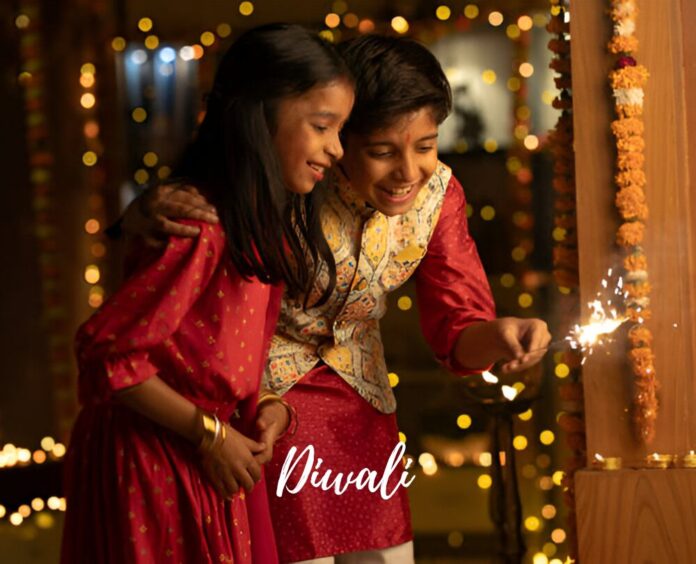
Diwali 2026 falls on Sunday, November 8. The five-day festival runs from Dhanteras on Friday, November 6 through Bhai Dooj on Tuesday, November 10, 2026.
Lakshmi Puja — the ritual at the heart of the festival — takes place during Pradosh Kaal on the evening of November 8, coinciding with Kartik Amavasya, the new moon night of the Hindu lunar month of Kartik.
Diwali is observed by more than 1 billion people across Hindu, Sikh, Jain, and some Buddhist traditions.
It is a gazetted public holiday in India, Nepal, Sri Lanka, Mauritius, Fiji, Guyana, Trinidad and Tobago, and Singapore (partial).
In 2026, the Sunday date eliminates the need for compensatory leave in India — the full weekend aligns with the main celebration day for the first time since 2020.
This guide covers the confirmed 2026 date, complete five-day calendar, city-specific Lakshmi Puja muhurat timings, the origins and religious significance of Diwali across four traditions, day-by-day ritual breakdown, decoration and food customs, global celebrations, and eco-friendly alternatives.
Alternate spellings — Deepavali, Dipawali, Divali, Dewali — all refer to the same festival.
Table of Contents
When Is Diwali 2026?
Diwali 2026 is on Sunday, November 8. This is confirmed by the Kartik Amavasya tithi, which begins at approximately 11:27 AM on November 8 and ends at approximately 2:17 PM on November 9 according to the Hindu panchang (lunar almanac).
Diwali 2026 Date: Sunday, November 8
The main day of Diwali — Lakshmi Puja — is fixed to the night of Kartik Amavasya, the 15th day (new moon) of the dark fortnight of Kartik month in the Hindu lunar calendar.
Because the Hindu lunar year is approximately 354 days — roughly 11 days shorter than the Gregorian solar year — the date of Diwali shifts each year relative to the Gregorian calendar, typically falling between mid-October and mid-November.
In 2025, Diwali fell on Monday, October 20. In 2026, it moves forward to Sunday, November 8 — an 18-day forward shift, within the normal range of annual drift.
This shift occurs because an intercalary (leap) month was added to the Hindu lunar calendar in a preceding cycle, temporarily compressing the drift before it resets.
Complete 5-Day Diwali 2026 Calendar
| Day | Festival Name | Date | Day of Week | Primary Deity / Theme |
|---|---|---|---|---|
| Day 1 | Dhanteras (Dhanatrayodashi) | Friday, November 6, 2026 | Friday | Goddess Lakshmi, Lord Dhanvantari |
| Day 2 | Choti Diwali / Narak Chaturdashi | Saturday, November 7, 2026 | Saturday | Lord Krishna / Kali Chaudas |
| Day 3 | Diwali / Lakshmi Puja | Sunday, November 8, 2026 | Sunday | Goddess Lakshmi, Lord Ganesha |
| Day 4 | Govardhan Puja / Padwa / Annakut | Monday, November 9, 2026 | Monday | Lord Krishna |
| Day 5 | Bhai Dooj (Bhai Phota / Bhai Tika) | Tuesday, November 10, 2026 | Tuesday | Yama, sibling bond |
Note: In West Bengal and Odisha, the night of November 8 is observed as Kali Puja — worship of Goddess Kali on the same Kartik Amavasya date, running parallel to Lakshmi Puja in North India.
Why Diwali 2026 Is Later Than 2025
Diwali 2025 fell on Monday, October 20. The 2026 date of Sunday, November 8 represents an 18-day forward movement. This is a normal consequence of the 11-day annual offset between the Hindu lunar calendar and the Gregorian calendar.
Periodically, an extra lunar month (Adhik Maas or Mal Maas) is inserted into the Hindu calendar to re-synchronize it with the solar year — this happened in 2023, which caused a ripple effect on festival dates through 2025 and 2026.
The table below shows Diwali dates from 2024 through 2030 for multi-year planning:
| Year | Diwali Date | Day of Week |
|---|---|---|
| 2024 | Friday, November 1 | Friday |
| 2025 | Monday, October 20 | Monday |
| 2026 | Sunday, November 8 | Sunday |
| 2027 | Friday, October 29 | Friday |
| 2028 | Thursday, November 16 | Thursday |
| 2029 | Monday, November 5 | Monday |
| 2030 | Saturday, October 26 | Saturday |
Diwali 2026 Lakshmi Puja Muhurat — Auspicious Timings
The most auspicious window for Lakshmi Puja on Diwali 2026 is during Pradosh Kaal — the approximately two-hour period beginning after sunset on November 8. For New Delhi, this window falls between approximately 5:54 PM and 7:50 PM IST.
What Pradosh Kaal and Sthir Lagna Mean
Pradosh Kaal is the twilight period following sunset, considered the most auspicious time for Lakshmi Puja because Goddess Lakshmi is believed to move between homes during this window. It spans approximately 2 hours and 24 minutes after sunset.
Within Pradosh Kaal, the Vrishabha Lagna (Taurus ascendant) is specifically sought for the puja. Vrishabha (Taurus) is a Sthir (fixed) sign in Vedic astrology. Performing Lakshmi Puja during Sthir Lagna is believed to “fix” or retain the presence of Lakshmi in the household — she is said not to depart from a home where the puja was performed during this period.
In 2026, the Sunday date carries additional significance in the Hindu panchang. Sunday (Ravivaar) is governed by the Sun (Surya), which is associated with light and energy — thematically aligned with Diwali’s core symbolism.
Diwali 2026 Lakshmi Puja Muhurat — City-Wise Timings
The times below are approximate, based on local sunset calculations. Exact timings vary by a few minutes depending on the specific panchang used. Always verify with a local panchang or platforms such as DrikPanchang for precise city-level muhurat.
| City | Approximate Sunset | Pradosh Kaal Start | Best Muhurat Window |
|---|---|---|---|
| New Delhi | 5:36 PM | 5:54 PM | 5:54 PM – 7:50 PM |
| Mumbai | 6:02 PM | 6:15 PM | 6:15 PM – 8:00 PM |
| Bangalore | 5:52 PM | 6:00 PM | 6:00 PM – 7:55 PM |
| Chennai | 5:47 PM | 5:55 PM | 5:55 PM – 7:45 PM |
| Kolkata | 4:58 PM | 5:10 PM | 5:10 PM – 7:00 PM |
| Ahmedabad | 6:00 PM | 6:12 PM | 6:12 PM – 8:05 PM |
| Hyderabad | 5:51 PM | 6:00 PM | 6:00 PM – 7:50 PM |
All times are IST (UTC+5:30). Kolkata’s earlier sunset is due to its eastern longitude (~88.36°E), resulting in sunset nearly 40 minutes earlier than Mumbai (~72.83°E).
Lakshmi Puja Samagri (Ritual Materials) and Puja Sequence
Puja Samagri Checklist
The following items are required for a complete Lakshmi Puja at home:
- Murti (idol) or framed image of Goddess Lakshmi and Lord Ganesha
- Red cloth for the puja platform (Ganesha is placed to the left, Lakshmi to the right)
- Kalash (brass or copper pot) filled with water, topped with mango leaves and a coconut
- Fresh lotus flowers or red/pink flowers
- Incense sticks (agarbatti) and dhoop
- Camphor (kapur) for aarti
- Ghee and mustard oil diyas
- Raw rice, turmeric (haldi), red vermilion (kumkum)
- Betel leaves and betel nuts (paan and supari)
- Fresh sweets: kheer, modak, or barfi as bhog
- Coins and currency notes (placed before the idol to be blessed)
- Panchang or Diwali puja booklet for mantras
Simplified 5-Step Puja Sequence
- Purification: Clean the puja space. Lay the red cloth. Place the Lakshmi-Ganesha murti. Set up the Kalash to the right.
- Invocation (Avahan): Light the ghee diya. Offer flowers and rice. Chant the Lakshmi Avahan mantra to invite the goddess.
- Shodashopachara (16 offerings): Offer water (for foot washing), fresh flowers, incense, camphor light, food (bhog), and sweets in sequence.
- Aarti: Perform aarti with a camphor plate, moving it in a clockwise circular motion before the murti. Ring the bell throughout.
- Prasad distribution: Distribute the blessed sweets to all family members. Place blessed coins in the home safe or cash box.
What Is Diwali? Meaning, History, and Significance
Diwali is a multi-religious festival of lights observed across Hindu, Sikh, Jain, and some Buddhist traditions, deriving its name from the Sanskrit term Deepa (lamp) + Avali (row) — meaning “row of lights.” It falls annually on the new moon night of Kartik month and symbolizes the victory of light over darkness, good over evil, and knowledge over ignorance.
Etymology and Alternate Names
The Sanskrit root Deepavali is the formal name used primarily in South India and internationally. Regional and linguistic variants include:
| Name | Region / Language | Notes |
|---|---|---|
| Diwali | Hindi (North India) | Most widely used colloquial form |
| Deepavali | Sanskrit / South India | Formal and South Indian usage |
| Dipawali | Eastern India | Common in Bihar, Jharkhand |
| Divali | Caribbean diaspora | Used in Trinidad, Tobago, Guyana |
| Dewali | Informal variant | Phonetic spelling, common in SMS/search |
| Bandi Chhor Divas | Sikh tradition | “Day of Liberation” — parallel observance |
Why Is Diwali Celebrated? The Origin Stories
Diwali does not have a single origin story. Four distinct religious traditions assign different events to the same Kartik Amavasya date.
Hindu (North India) — Lord Rama’s Return to Ayodhya
The most widely cited narrative in North India connects Diwali to the Ramayana. Lord Rama, accompanied by Sita and Lakshmana, returned to Ayodhya after 14 years of exile and his defeat of the demon king Ravana in Lanka. The citizens of Ayodhya illuminated the city with rows of clay diyas to welcome him home on the moonless night. This is the origin of lighting diyas as a central Diwali ritual.
Hindu (South India) — Krishna and Narakasura
In South India, Diwali (observed as Deepavali, one day earlier on Narak Chaturdashi) commemorates Lord Krishna’s defeat of the demon Narakasura, who had imprisoned 16,100 souls. Krishna and his wife Satyabhama defeated Narakasura before dawn. This is the origin of the pre-dawn oil bath ritual (abhyanga snanam) observed in Tamil Nadu, Andhra Pradesh, Karnataka, and Kerala.
Sikh Tradition — Bandi Chhor Divas
Bandi Chhor Divas (“Day of Liberation”) commemorates the release of the sixth Sikh Guru, Guru Hargobind Ji, from the Gwalior Fort on Kartik Amavasya in 1619 CE. He secured the simultaneous release of 52 Hindu kings who had been imprisoned by Mughal Emperor Jahangir. The Golden Temple in Amritsar has been illuminated on this night ever since. Sikhs observe Diwali and Bandi Chhor Divas as a joint occasion.
Jain Tradition — Mahavira’s Nirvana
In Jainism, Diwali marks the Nirvana (spiritual liberation) of Lord Mahavira, the 24th Tirthankara of Jainism, on Kartik Amavasya, 527 BCE. Jains light lamps to symbolize the light of Mahavira’s knowledge continuing in the world after his physical death. This is documented in the Jain text Kalpa Sutra.
Who Celebrates Diwali and Where
Diwali is observed in the following countries as a public holiday:
| Country | Holiday Status | Notes |
|---|---|---|
| India | National public holiday | Banks, NSE/BSE, and central government offices closed |
| Nepal | Public holiday | Tihar festival; 5-day observance with slight regional variations |
| Sri Lanka | Public holiday | Deepavali, primarily Tamil Hindu community |
| Mauritius | Public holiday | Large Indo-Mauritian population |
| Fiji | Public holiday | Indo-Fijian community |
| Guyana | Public holiday | Indo-Guyanese community |
| Trinidad and Tobago | Public holiday | One of the largest Diwali observances outside India |
| Singapore | Public holiday | Tamil Hindu community; Serangoon Road (Little India) central |
| United States | Not a federal holiday | Several states recognize it as a school holiday |
| United Kingdom | Not a public holiday | Widely celebrated; Leicester holds one of Europe’s largest events |
In the United States, Diwali has been officially recognized as a New York City public school holiday since 2023. Several states — including Connecticut, North Carolina, and Pennsylvania — have introduced legislation recognizing Diwali on school and government calendars.
Dev Deepawali: The Extension of Diwali
Dev Deepawali (“Diwali of the Gods”) is observed 15 days after Diwali, on the full moon night of Kartik Purnima. In 2026, Dev Deepawali falls on Monday, November 23.
Varanasi is the primary site: the ghats of the Ganges River are illuminated with more than 1 million diyas. It is a separate event from the main Diwali festival and draws pilgrims and tourists from across India.
The 5 Days of Diwali 2026 — Day-by-Day Breakdown
Each of the five days of Diwali has a distinct name, ritual focus, and mythological association. The days are not interchangeable — the specific puja, shopping customs, and food traditions differ across each one.
Day 1 — Dhanteras: Friday, November 6, 2026
Dhanteras is the most auspicious day of the year to purchase gold, silver, or new utensils. The name derives from Dhan (wealth) + Teras (13th day of the lunar fortnight). It falls on Trayodashi (13th day) of the Krishna Paksha (dark fortnight) of Kartik.
Lord Dhanvantari — the physician of the gods and the deity of Ayurveda — is believed to have emerged from the cosmic ocean (Samudra Manthan) carrying a pot of amrit (nectar of immortality) on this day. For this reason, Dhanteras is also called Dhanvantari Jayanti.
Ritual observances on Dhanteras include:
- Purchasing gold coins, silver utensils, stainless steel, or new appliances (considered to multiply wealth)
- Lighting 13 diyas facing south — the direction of Yama, god of death — as protection from untimely death
- Performing evening Dhanvantari and Lakshmi puja during Pradosh Kaal (approximately 6:00 PM – 8:30 PM)
- Drawing small footprints in rangoli powder from the entrance of the home toward the puja room — symbolizing Goddess Lakshmi entering the household
In 2026, Dhanteras falls on a Friday, which is governed by Venus (Shukra) in Vedic astrology — considered additionally auspicious for wealth and beauty rituals.
Day 2 — Narak Chaturdashi / Choti Diwali: Saturday, November 7, 2026
Narak Chaturdashi — also called Choti Diwali, Kali Chaudas, and Roop Chaudas — commemorates Lord Krishna’s defeat of the demon Narakasura and the liberation of 16,100 captive souls. It falls on Chaturdashi (14th day) of Kartik Krishna Paksha.
In South India, this is the primary celebration day — equivalent to the main Diwali of North India. Observances begin before dawn:
- Abhyanga Snanam (oil bath ritual): Sesame oil mixed with fragrant herbs is applied to the body before sunrise. This is believed to remove sin and negativity. In Tamil Nadu, families wake between 4:00 AM and 5:30 AM for this ritual.
- Firecrackers are burst at sunrise — symbolizing the defeat of Narakasura
- Home cleaning and rangoli designs are completed in preparation for the main Diwali evening
- In Gujarat and Rajasthan, this night is Kali Chaudas — worship of Goddess Kali and tantric deities
Day 3 — Diwali / Lakshmi Puja: Sunday, November 8, 2026
Sunday, November 8 is the main day of Diwali 2026. Lakshmi Puja is performed during Pradosh Kaal on the night of Kartik Amavasya. This is the night of complete darkness — no moonlight — making the illumination of diyas both spiritually and visually significant.
Household observances follow a typical sequence:
- Morning: Final cleaning, placing fresh rangoli at the entrance, wearing new clothes
- Afternoon: Preparing or unpacking mithai, wrapping gifts, arranging the puja space
- Pradosh Kaal (see city-wise table above): Performing Lakshmi-Ganesha puja, lighting diyas throughout the home
- Post-puja: Lighting sparklers and firecrackers, visiting neighbors to exchange sweets (mithai), family dinner
West Bengal and Odisha exception: On the same night, November 8, these states observe Kali Puja instead of Lakshmi Puja. Goddess Kali (Mahakali) is worshipped on Kartik Amavasya. Pandals (temporary shrines) are erected across Kolkata, and the ritual atmosphere is distinctly different from the Lakshmi Puja tradition of North and West India. Both observances occur simultaneously on the same night.
Day 4 — Govardhan Puja / Padwa / Annakut: Monday, November 9, 2026
Govardhan Puja commemorates Lord Krishna lifting Mount Govardhan to protect the residents of Vrindavan from seven days of torrential rain sent by Lord Indra. It falls on Pratipada (first day) of Kartik Shukla Paksha — the day after Amavasya.
The central ritual is Annakut (“mountain of food”) — an offering of 56 food items (Chhappan Bhog) to Lord Krishna, arranged in the form of a hill to symbolize Mount Govardhan. Temples across Mathura, Vrindavan, and Gujarat are particularly active on this day.
Regional variations on Govardhan Puja day are significant:
- Gujarat and Maharashtra: This day is observed as Padwa or Bestu Varas — the Gujarati and Marathi New Year. Business communities perform Chopda Pujan — the blessing of new account books for the financial year ahead.
- Punjab and Haryana: Govardhan Puja is observed with community worship and Annakut offerings at temples.
- Rajasthan: Cow worship (Go Puja) is prominent — cows are decorated and honored in procession.
Day 5 — Bhai Dooj: Tuesday, November 10, 2026
Bhai Dooj (also called Bhai Phota in West Bengal, Bhai Tika in Nepal, and Bhaiya Dooj) celebrates the bond between brothers and sisters. It falls on Dwitiya (second day) of Kartik Shukla Paksha.
The ritual involves sisters applying a tilak (mark of colored paste made from rice, turmeric, and kumkum) on their brothers’ foreheads, accompanied by aarti. Brothers give gifts in return.
The mythological origin traces to Yama, god of death, visiting his sister Yami (the Yamuna River) on this day — who applied tilak on him and expressed her wish that no harm should befall him.
The tilak muhurat for Bhai Dooj 2026 falls approximately between 1:00 PM and 3:30 PM IST on November 10. The afternoon timing is determined by the Dwitiya tithi window.
Diwali 2026 Decorations
Diwali decorations are centered on light and auspicious symbols that invite Goddess Lakshmi into the home. The primary elements are diyas, rangoli, toran (door hangings), marigold garlands, and string lights.
Traditional Diwali Decoration Elements
Each traditional decoration element carries a ritual function:
- Diyas (clay oil lamps): Placed on windowsills, doorsteps, roof edges, and along courtyard walls. The light guides Goddess Lakshmi into the home on the dark new moon night. Sesame oil or mustard oil is traditional; ghee diyas are used during puja.
- Rangoli: Drawn at the entrance (threshold) of the home in colored powder, rice flour, or flower petals to welcome Lakshmi. Common motifs include the lotus (Lakshmi’s seat), peacock, swastika (auspicious symbol in Hindu tradition), geometric grids, and diya shapes.
- Toran (door hanging): Marigold garlands or beaded fabric hangings fixed across the main entrance doorframe. Marigold is Lakshmi’s preferred flower; the orange-gold color is associated with prosperity.
- Urli bowls: Shallow brass or copper bowls filled with water, floating flower petals, and tea-light candles — used as a table centerpiece.
- String lights / fairy lights: Wound around balcony railings, window frames, and staircases. Warm amber or golden LED strings are traditional in tone.
Rangoli Designs for Diwali 2026
Rangoli difficulty scales across three levels:
- Beginner: Dot-grid patterns (kolam style), single diya outline, simple flower with 8 petals. Suitable for first-timers and children. Recommended material: stencil + colored powder.
- Intermediate: Peacock design, lotus mandala, concentric geometric squares with diagonal fills. Approximate completion time: 30–45 minutes.
- Advanced: Full mandala with multiple concentric rings, color gradient fills, 3D embedded diya design. Requires chalk or pencil outline first.
For eco-friendly rangoli: use flower petals (marigold, rose, jasmine) arranged on a tray or directly on the floor. No colored powder is required, and the material decomposes naturally.
2026 Decoration Trends
- Terracotta revival: Handmade clay diyas and terracotta décor over mass-produced plastic items
- Sustainable materials: Paper lanterns, unbleached cotton torans, reusable wooden cutouts, jute packaging
- 3D rangoli: Elevated designs with layered depth, diyas embedded within the rangoli pattern
- Minimalist arrangement: Single curated diya grouping with marigold accents, replacing elaborate multi-element displays
Diwali Decorations for Apartments
Apartment-specific constraints (no-candle buildings, shared corridors, limited floor space) can be addressed with the following:
- Sticker rangoli or pre-printed fabric rangoli mats placed on a tray
- Battery-operated LED diya strings (no open flame)
- Compact toran for the apartment front door
- Window sill diya arrangements using battery candles
- Marigold petal rangoli on a large decorative plate
Diwali Food and Sweets
Diwali food is centered on sweets (mithai), fried savory snacks, and shared communal meals. The specific dishes vary significantly between North and South India.
Traditional Diwali Sweets (Mithai)
The following sweets are most commonly prepared or gifted during Diwali:
| Sweet | Primary Ingredients | Region | Notes |
|---|---|---|---|
| Kaju Katli | Cashew paste, sugar, silver leaf | Pan-India | Most gifted Diwali sweet; made into diamond shapes |
| Gulab Jamun | Khoya (reduced milk), sugar syrup | North India | Deep-fried, soaked in rose-cardamom syrup |
| Kheer | Rice, full-fat milk, cardamom, saffron | Pan-India | Served as bhog during puja; made in large batches |
| Jalebi | Fermented wheat batter, saffron syrup | North India | Crispy fried spirals; served fresh and hot |
| Coconut Ladoo | Desiccated coconut, condensed milk | Pan-India | 3-ingredient recipe; 15-minute preparation |
| Barfi | Milk solids, sugar, various flavors | Pan-India | Available in dozens of regional variants |
| Chakli / Murukku | Rice flour, black sesame, spices | South India | Spiral savory snack; central to South Indian Diwali |
| Mathri | Refined flour, carom seeds, ghee | North India | Dry, flaky biscuit; keeps well for gifting |
North India vs South India Diwali Food
| Dimension | North India | South India (Deepavali) |
|---|---|---|
| Primary celebration day | Amavasya (Day 3 — Nov 8) | Chaturdashi (Day 2 — Nov 7) |
| Meal timing | Evening feast after puja | Pre-dawn meal after oil bath |
| Signature sweets | Kaju katli, gulab jamun, barfi | Coconut ladoo, adhirasam, mysore pak |
| Signature savories | Mathri, namakpare, kachori | Murukku, chakli, ribbon pakoda |
| Gifting format | Elaborate mithai boxes; dry fruit hampers | Family preparation at home; less commercial gifting |
| Card games | North Indian card game (teen patti) tradition on Diwali night | Not a common tradition |
Diwali 2026 Gifts — What to Give and Why
Diwali gifting follows a well-established hierarchy: sweets and dry fruits for general gifting, gold or silver for Dhanteras, and household items for close family. Corporate gifting is distinct from personal gifting in both scale and format.
Traditional Diwali Gift Categories
The following gift types are the most widely exchanged at Diwali:
- Mithai boxes and dry fruit hampers: The default gift for colleagues, neighbors, and extended family. Kaju katli, mixed barfi, and dry fruit assortments are most common.
- Silver coins and utensils: Gifted on or around Dhanteras (Friday, November 6). Silver is considered auspicious and is believed to grow in value when received as a Diwali gift.
- Lakshmi-Ganesha idols: Given to households as blessings for prosperity; popular for housewarming gifts that coincide with Diwali.
- Puja thali sets: Brass or silver sets containing diya, incense holder, kumkum container, and small bell.
- Diya and candle sets: Especially relevant in 2026 given the terracotta and handmade aesthetic trend.
Corporate Diwali Gifting
Corporate Diwali gifting typically involves:
- Branded dry fruit boxes with company insignia
- Premium tea, spice, or artisanal food hampers
- Personalized diyas or candle sets with engraving
- Eco-friendly options: potted plants, seed kits, charitable donation cards
The budget range for corporate Diwali gifts in India typically spans ₹500–₹5,000 per recipient at mid-tier companies. Premium corporate hampers from brands such as Haldiram’s, Mithai by Kesar, or curated artisan platforms range from ₹2,000 to ₹15,000.
Eco-Friendly Diwali Gift Ideas
- Live plants (money plant, peace lily, succulents) in decorated terracotta pots
- Handmade items from certified artisan cooperatives (e.g., GoCoop, Craftsvilla)
- Charitable donation in the recipient’s name (organizations such as GiveIndia or Akshaya Patra)
- Experience vouchers: restaurant dinners, spa sessions, museum memberships
- Sustainable home décor: jute baskets, handwoven table runners, beeswax candles
Happy Diwali 2026 — Wishes, Messages, and Greetings
Diwali Wishes in English
The following greetings are appropriate for Diwali 2026 across family, friends, and professional contexts:
- “Wishing you a bright and prosperous Diwali 2026.”
- “May the lights of Diwali illuminate your home and your life. Happy Diwali.”
- “Shubh Deepavali — may this festival bring you joy, peace, and abundance.”
- “Warm wishes to you and your family on the occasion of Diwali 2026.”
- “May Goddess Lakshmi bless your home this Diwali. Happy November 8.”
Diwali Wishes in Hindi (with transliteration)
- दीपावली की हार्दिक शुभकामनाएं — Deepavali ki hardik shubhkamnayein (Heartfelt Diwali wishes)
- शुभ दीपावली — Shubh Deepavali (Auspicious Diwali)
- आपको और आपके परिवार को दिवाली की बहुत बधाई — Aapko aur aapke parivaar ko Diwali ki bahut badhai (Congratulations on Diwali to you and your family)
Diwali Messages for WhatsApp and Social Media
Short-form messages suitable for status updates and Instagram captions:
- “Lights on. Diyas lit. Lakshmi welcomed. Happy Diwali 2026. 🪔”
- “Five days of light, food, family, and fire. Shubh Deepavali.”
- “November 8, 2026 — the night belongs to Lakshmi.”
Relevant hashtags for 2026: #HappyDiwali2026 #ShubhDeepavali #Diwali2026 #FestivalOfLights #Deepavali2026 #Diwali #DiwaliDecor
How to Celebrate Diwali 2026 at Home
Week-Before Preparation Checklist
The following preparations are typically completed in the 7 days before Diwali:
- Deep clean the home — Goddess Lakshmi is believed to visit only clean, well-lit homes; thorough cleaning is a ritual prerequisite, not merely a practical one
- Purchase diyas, rangoli powder, and puja samagri — Available from local kirana shops, handicraft markets, and online retailers such as Amazon, Flipkart, or IndiaMart
- Buy new clothes — Wearing new clothing on Diwali is a near-universal tradition; purchase by October end to avoid festive-season shortages
- Book travel — For those traveling home, train and flight tickets for the November 6–10 window sell out months in advance; booking by August–September is recommended
- Order or prepare mithai — Home-prepared sweets require 1–2 days; ordered sweets from mithai shops often require advance booking during the festive season
Day-of Timeline: Sunday, November 8, 2026
| Time | Activity |
|---|---|
| Morning (6:00 AM – 10:00 AM) | Final home cleaning, setting up puja space, drawing entrance rangoli |
| Morning–Afternoon (10:00 AM – 3:00 PM) | Preparing or unpacking mithai, gift wrapping, outfit preparation |
| Afternoon (3:00 PM – 5:30 PM) | Arranging diyas throughout the home (unlit), final decoration |
| Pradosh Kaal (5:54 PM onwards) | Lighting diyas, performing Lakshmi-Ganesha puja (see muhurat table) |
| Post-puja (7:30 PM – 9:00 PM) | Sparklers, fireworks, visiting neighbors, exchanging sweets |
| Night (9:00 PM onwards) | Family dinner, card games (North India), family gatherings |
Regional Diwali Customs Compared
| Region | Main Celebration Day | Distinguishing Custom |
|---|---|---|
| North India (UP, Delhi, Rajasthan) | Day 3 — Lakshmi Puja (Nov 8) | Grand fireworks, card games (teen patti), large mithai exchanges |
| West Bengal and Odisha | Day 3 — Kali Puja (Nov 8) | Goddess Kali worshipped; pandals set up across cities |
| South India (Tamil Nadu, AP, Karnataka) | Day 2 — Narak Chaturdashi (Nov 7) | Pre-dawn oil bath, murukku and chakli as signature foods |
| Gujarat and Maharashtra | Day 4 — Padwa/New Year (Nov 9) | Chopda Pujan; Gujarati/Marathi New Year celebrations |
| Punjab (Sikh tradition) | Day 3 — Bandi Chhor Divas (Nov 8) | Golden Temple illuminated; historical liberation commemorated |
| Nepal | Day 3 — Tihar (Nov 8) | Crow, dog, cow, and ox also worshipped on preceding days |
Diwali Etiquette for First-Time Participants
- Greet hosts with “Shubh Deepavali” or “Happy Diwali” — both are appropriate
- Remove footwear before entering the puja area or before stepping over the rangoli at the entrance
- Accept mithai offered to you — declining is considered inauspicious during the festival
- Dress in bright, festive colors: red, orange, yellow, gold, green, and pink are appropriate. White and black are traditionally associated with mourning in some Hindu communities and are typically avoided during Diwali
- Reciprocate sweets if visiting — arriving empty-handed is considered poor form
Diwali 2026 Around the World
Diwali in the United Kingdom (2026)
Diwali is not a public holiday in the United Kingdom, but it is widely celebrated across cities with large South Asian populations. Key events include:
- Leicester Diwali: The Golden Mile (Belgrave Road) light switch-on is one of Europe’s largest Diwali street events, drawing over 35,000 attendees annually. The 2026 event will be organized around the Sunday, November 8 date.
- Trafalgar Square, London: The annual “Diwali on the Square” event, organized by the Mayor of London’s office, has drawn up to 40,000 visitors in recent years.
- Edinburgh and Glasgow: Growing South Asian community events in Scotland.
Diwali in the United States (2026)
As of 2023, Diwali is a public school holiday in New York City — the first major U.S. city to grant it this status. The 2026 Sunday date means no school conflict for the main celebration day. Notable events:
- Annual White House Diwali reception (held since 2003 under the George W. Bush administration)
- Major public events in Edison (NJ), Houston (TX), San Jose (CA), Chicago (IL), and the New York metro area
- Several U.S. state legislatures have introduced or passed resolutions recognizing Diwali on official calendars
Best Places in India to Experience Diwali 2026
| Location | Key Event | What Makes It Distinct |
|---|---|---|
| Ayodhya, Uttar Pradesh | Saryu River ghats illuminated; Deepotsav (lamp festival) | Birthplace of Lord Rama; over 1 million diyas lit along the riverbank; government-organized Deepotsav has broken Guinness records |
| Varanasi, Uttar Pradesh | Ganga Aarti at Dashashwamedh Ghat; Dev Deepawali on Nov 23 | Ancient city; 84 ghats lit with diyas; Dev Deepawali 15 days later is a separate unmissable event |
| Amritsar, Punjab | Golden Temple illuminated; Bandi Chhor Divas | The Golden Temple’s reflection in the Amrit Sarovar (sacred pool) during fireworks is one of the most photographed Diwali images globally |
| Jaipur, Rajasthan | City-wide light displays; Hawa Mahal and City Palace lit | The entire walled city of Jaipur competes in light decoration; Pink City turns gold |
| Mumbai | Marine Drive fireworks; citywide celebrations | Urban scale and scale of public fireworks; large Gujarati community observance of Padwa on Nov 9 |
Eco-Friendly Diwali 2026
The Pollution Data
Air quality in Delhi-NCR during Diwali routinely exceeds hazardous levels. Measured data from prior years:
- Delhi’s AQI (Air Quality Index) reaches 300–500+ on Diwali night, classified as “Hazardous” by the World Health Organization (AQI 300+ = hazardous; above 400 = beyond AQI scale for Delhi’s CPCB measurement)
- PM2.5 particulate matter spikes to as much as 875% above safe 24-hour limits on Diwali night, according to monitoring data from the Central Pollution Control Board (CPCB)
- Fireworks contribute approximately 30–40% of the total particulate spike on Diwali night; pre-existing vehicle, industrial, and crop-burning pollution comprises the remainder
- “Green crackers” certified by CSIR-NEERI (Council of Scientific and Industrial Research – National Environmental Engineering Research Institute) produce approximately 30% fewer emissions per unit than standard crackers, but real-world AQI monitoring has shown negligible difference at city scale given the volume of crackers used
Delhi NCR bans the sale and use of all firecrackers — including green crackers — during specified air emergency periods; in 2023 and 2024 this included the Diwali window. Legal status for 2026 will be governed by court orders issued closer to the date.
Eco-Friendly Celebration Alternatives
The following substitutions reduce environmental impact without changing the core structure of Diwali observance:
- Decorations: Use terracotta diyas (biodegradable, traditional) over plastic; paper lanterns over single-use plastic décor; fresh flower rangoli over synthetic powder
- Lighting: LED string lights consume approximately 75–80% less energy than incandescent equivalents and do not produce heat or fire risk
- Alternatives to firecrackers: Community diya-lighting events; laser light projectors; sparkler-free glow toys for children; flower petal throwing (gulal-style)
- Gifts: Minimal-packaging options; potted plants; artisan-made goods with no synthetic materials
- Sweets: Home-prepared mithai eliminates packaging waste; bring reusable containers to mithai shops for bulk purchases
Why Firework-Free Diwali Is Growing
The shift toward firework-free Diwali is not uniform — it is concentrated in urban, metro areas and diaspora communities abroad. Contributing factors include:
- Health considerations for asthma patients, young children, elderly individuals, and pets (the sharp spike in PM2.5 is physiologically equivalent to smoking 12–15 cigarettes in a single night, according to environmental health researchers)
- Legal restrictions in Delhi NCR, which have expanded progressively since 2017
- Urban apartment density — shared outdoor spaces make large-scale firecracker use impractical
- Growing awareness campaigns from organizations such as Awaaz Foundation and Arth — Sanchar
Frequently Asked Questions About Diwali 2026
When is Diwali 2026?
Diwali 2026 falls on Sunday, November 8. The five-day festival runs from Dhanteras on Friday, November 6 through Bhai Dooj on Tuesday, November 10, 2026.
What is the Lakshmi Puja muhurat for Diwali 2026?
The most auspicious window for Lakshmi Puja is during Pradosh Kaal. For New Delhi, this is approximately 5:54 PM to 7:50 PM IST on November 8. Times differ by city based on local sunset; Kolkata’s muhurat begins approximately 45 minutes earlier than Mumbai’s.
Is Diwali a public holiday in India in 2026?
Yes. November 8, 2026, is a gazetted central government public holiday in India. Banks, central government offices, the NSE, and the BSE will be closed. State government offices follow the central government holiday schedule.
What is the difference between Diwali and Deepavali?
Both names refer to the same festival. Diwali is the Hindi colloquial form used predominantly in North India. Deepavali is the Sanskrit name used in South India, Sri Lanka, Singapore, and Malaysia. The names are interchangeable in modern usage, though regional communities typically use one or the other.
Do Sikhs celebrate Diwali?
Yes. Sikhs observe Bandi Chhor Divas on the same date — November 8, 2026 — commemorating the release of Guru Hargobind Ji from Gwalior Fort in 1619 CE. The Golden Temple in Amritsar is illuminated on this night. The observance is distinct from Lakshmi Puja but occurs on the same evening.
Why is Diwali in November in 2026 instead of October?
Diwali follows Kartik Amavasya in the Hindu lunar calendar. The lunar calendar year is approximately 354 days — 11 days shorter than the Gregorian year — causing the festival date to shift annually. In 2025, Diwali fell on October 20. The 18-day forward shift to November 8 in 2026 is within the normal range of annual drift caused by the lunar-solar calendar offset.
What is Dhanteras?
Dhanteras is the first day of the five-day Diwali festival, falling on Friday, November 6, 2026. It is the most auspicious day of the year to purchase gold, silver, or new metal utensils. It also marks the birth anniversary of Lord Dhanvantari, the deity of Ayurveda, who is worshipped for health and well-being.
What do you say to someone celebrating Diwali?
The standard greetings are “Happy Diwali,” “Shubh Deepavali,” or “Shubh Diwali.” In Hindi, “Deepavali ki hardik shubhkamnayein” means “heartfelt Diwali wishes.” All of these are appropriate across Hindu, Sikh, and Jain communities.
Diwali 2026: Key Facts Summary
| Detail | Information |
|---|---|
| Main Date | Sunday, November 8, 2026 |
| Festival Duration | 5 days: November 6–10, 2026 |
| Lunar Basis | Kartik Amavasya (new moon of Kartik month) |
| Amavasya Tithi Start | ~11:27 AM, November 8, 2026 |
| Lakshmi Puja Muhurat (Delhi) | ~5:54 PM – 7:50 PM IST |
| Day 1 — Dhanteras | Friday, November 6, 2026 |
| Day 2 — Narak Chaturdashi | Saturday, November 7, 2026 |
| Day 3 — Diwali / Lakshmi Puja | Sunday, November 8, 2026 |
| Day 4 — Govardhan Puja / Padwa | Monday, November 9, 2026 |
| Day 5 — Bhai Dooj | Tuesday, November 10, 2026 |
| Dev Deepawali (Varanasi) | Monday, November 23, 2026 |
| Public Holiday (India) | Yes — central government gazetted |
| Diwali 2027 | Friday, October 29, 2027 |

