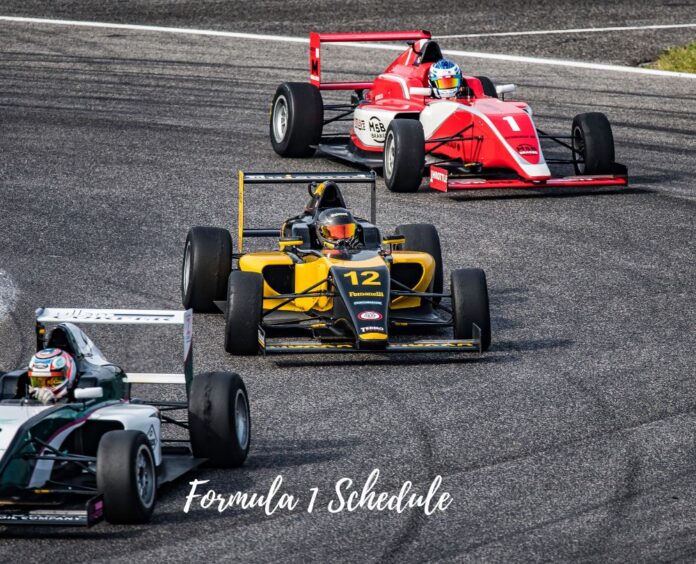
The 2026 Formula 1 season runs from March 6 to December 6 across 21 countries on five continents. The 2026 FIA Formula One World Championship runs across 24 Grand Prix weekends, opening at Albert Park, Melbourne, Australia on Friday, March 6 and closing at Yas Marina Circuit, Abu Dhabi on Sunday, December 6.
The season marks the 77th edition of the FIA Formula One World Championship and introduces the most sweeping regulation changes since 2022, a brand-new street circuit in Madrid, and six Sprint weekends distributed across four continents.
Pre-season testing takes place at Bahrain International Circuit across two separate windows — Testing 1 runs Wednesday, February 11 through Friday, February 13, and Testing 2 runs Wednesday, February 18 through Friday, February 20.
These six combined days represent the only public running of the new-regulation power unit cars before competitive action begins.
Table of Contents
Complete Formula 1 2026 Race Schedule — All 24 Grand Prix Dates
The 2026 Formula 1 calendar covers 21 countries across five continents, with 24 race weekends from March through December.
| Round | Grand Prix | Circuit | Dates | Sprint |
|---|---|---|---|---|
| 1 | Australian Grand Prix | Albert Park, Melbourne | Friday, March 6 – Sunday, March 8 | — |
| 2 | Chinese Grand Prix | Shanghai International Circuit | Friday, March 13 – Sunday, March 15 | ✓ |
| 3 | Japanese Grand Prix | Suzuka Circuit | Friday, March 27 – Sunday, March 29 | — |
| 4 | Bahrain Grand Prix | Bahrain International Circuit, Sakhir | Friday, April 10 – Sunday, April 12 | — |
| 5 | Saudi Arabian Grand Prix | Jeddah Corniche Circuit | Friday, April 17 – Sunday, April 19 | — |
| 6 | Miami Grand Prix | Miami International Autodrome | Friday, May 1 – Sunday, May 3 | ✓ |
| 7 | Canadian Grand Prix | Circuit Gilles-Villeneuve, Montréal | Friday, May 22 – Sunday, May 24 | ✓ |
| 8 | Monaco Grand Prix | Circuit de Monaco, Monte Carlo | Friday, June 5 – Sunday, June 7 | — |
| 9 | Spanish Grand Prix | Circuit de Barcelona-Catalunya | Friday, June 12 – Sunday, June 14 | — |
| 10 | Austrian Grand Prix | Red Bull Ring, Spielberg | Friday, June 26 – Sunday, June 28 | — |
| 11 | British Grand Prix | Silverstone Circuit | Friday, July 3 – Sunday, July 5 | ✓ |
| 12 | Belgian Grand Prix | Circuit de Spa-Francorchamps | Friday, July 17 – Sunday, July 19 | — |
| 13 | Hungarian Grand Prix | Hungaroring, Budapest | Friday, July 24 – Sunday, July 26 | — |
| 14 | Dutch Grand Prix | Circuit Zandvoort | Friday, August 21 – Sunday, August 23 | ✓ |
| 15 | Italian Grand Prix | Autodromo Nazionale Monza | Friday, September 4 – Sunday, September 6 | — |
| 16 | Madrid Grand Prix | TBC, Madrid* | Friday, September 11 – Sunday, September 13 | — |
| 17 | Azerbaijan Grand Prix | Baku City Circuit | Friday, September 24 – Sunday, September 26 | — |
| 18 | Singapore Grand Prix | Marina Bay Street Circuit | Friday, October 9 – Sunday, October 11 | ✓ |
| 19 | United States Grand Prix | Circuit of the Americas, Austin | Friday, October 23 – Sunday, October 25 | — |
| 20 | Mexican Grand Prix | Autodromo Hermanos Rodriguez, Mexico City | Friday, October 30 – Sunday, November 1 | — |
| 21 | Brazilian Grand Prix | Autodromo José Carlos Pace, São Paulo | Friday, November 6 – Sunday, November 8 | — |
| 22 | Las Vegas Grand Prix | Las Vegas Strip Circuit | Thursday, November 19 – Saturday, November 21 | — |
| 23 | Qatar Grand Prix | Lusail International Circuit | Friday, November 27 – Sunday, November 29 | — |
| 24 | Abu Dhabi Grand Prix | Yas Marina Circuit | Friday, December 4 – Sunday, December 6 | — |
*Subject to FIA circuit homologation.
The season divides into five distinct geographical legs. The opening Asia-Pacific triple-header covers Australia, China, and Japan across three consecutive weekends in March. A Middle East back-to-back follows in April with Bahrain and Saudi Arabia.
North America hosts Miami and Canada in May before the extended European summer leg runs from Monaco in June through Madrid in September — nine races across 14 weeks.
The season closes with an Americas triple-header in October–November and the Gulf triple-header finale in Las Vegas, Qatar, and Abu Dhabi.
2026 F1 Pre-Season Testing Schedule
Pre-season testing takes place at Bahrain International Circuit across two separate three-day windows in February 2026. Testing 1 runs from Wednesday, February 11 to Friday, February 13. Testing 2 follows the week after, from Wednesday, February 18 to Friday, February 20.
Bahrain International Circuit was selected for both windows because its consistent desert climate minimizes weather-related disruption and its infrastructure accommodates all ten — in 2026, eleven — constructor entries simultaneously.
The 5.412-kilometre layout covers high-speed straights, slow technical corners, and heavy braking zones that provide representative data across a broad range of car setup parameters.
These six days of testing constitute the only opportunity for teams to run the new 2026-regulation cars in a competitive environment before the season opener.
No championship points are awarded during testing, and no qualifying simulation results are published officially, but lap time data and sector breakdowns are widely tracked by teams and media.
How Many Races Are in the 2026 F1 Season?
The 2026 Formula 1 season contains 24 Grands Prix, 6 of which are Sprint weekends. The FIA and Formula 1 have self-imposed a 24-race ceiling on the calendar. Sprint weekends run at Shanghai, Miami, Montréal, Silverstone, Zandvoort, and Singapore.
The 6 Sprint Weekends in 2026 — Circuits, Dates, and Format
Six circuits host Sprint weekends in 2026, representing the fifth season of the Sprint format in Formula 1.
Sprint weekends replace one practice session with a Sprint Shootout qualifying session and add a 100-kilometre Sprint race on Saturday, run separately from and prior to Grand Prix qualifying.
The six Sprint venues and their dates are listed below.
| Sprint Round | Grand Prix | Circuit | Dates |
|---|---|---|---|
| 1 | Chinese Grand Prix | Shanghai International Circuit | Friday, March 13 – Sunday, March 15 |
| 2 | Miami Grand Prix | Miami International Autodrome | Friday, May 1 – Sunday, May 3 |
| 3 | Canadian Grand Prix | Circuit Gilles-Villeneuve | Friday, May 22 – Sunday, May 24 |
| 4 | British Grand Prix | Silverstone Circuit | Friday, July 3 – Sunday, July 5 |
| 5 | Dutch Grand Prix | Circuit Zandvoort | Friday, August 21 – Sunday, August 23 |
| 6 | Singapore Grand Prix | Marina Bay Street Circuit | Friday, October 9 – Sunday, October 11 |
China and Miami return for Sprint weekends for the second consecutive year. Silverstone hosts its Sprint event under the same format as 2025. Zandvoort and Singapore are new Sprint venues for 2026.
Notably, both Zandvoort and Singapore are circuits characterized by narrow layouts and limited overtaking opportunities, which has generated discussion among the fan community about their suitability for the Sprint format.
What Is the F1 Sprint Race Format?
The Sprint weekend format compresses the standard four-session structure into three sessions over Saturday and Sunday, while adding a standalone short race.
The session order for a Sprint weekend is as follows:
- Friday: FP1 (Free Practice 1, 60 minutes)
- Friday: Sprint Shootout (Qualifying for the Sprint, approximately 44 minutes across SQ1, SQ2, and SQ3)
- Saturday: Sprint Race (approximately 100 kilometres, roughly 30 laps depending on circuit length)
- Saturday: Grand Prix Qualifying (Q1, Q2, Q3 — 60 minutes total)
- Sunday: Grand Prix
Sprint points are awarded to the top 8 finishers: 8 points for first, 7 for second, 6 for third, 5 for fourth, 4 for fifth, 3 for sixth, 2 for seventh, and 1 for eighth.
Sprint results do not determine Grand Prix grid positions. Grand Prix qualifying, held on Saturday after the Sprint race, sets the Sunday grid independently.
The British Grand Prix at Silverstone illustrates the format precisely. On Friday, July 3, FP1 runs from 11:30 to 12:30 local time, followed by Sprint Qualifying from 15:30 to 16:14.
On Saturday, July 4, the Sprint Race runs from 11:00 to 12:00, and Grand Prix Qualifying follows from 15:00 to 16:00. The Grand Prix takes place on Sunday, July 5, at 14:00 local time.
Sprint Weekend Session Times Overview
Session start times vary by circuit, timezone, and local broadcasting requirements. All times below are local unless otherwise indicated.
| Session | Sprint Weekend Timing (approx.) | Notes |
|---|---|---|
| FP1 | Friday, 11:30–12:30 or 13:30–14:30 | One practice session only |
| Sprint Shootout (SQ1/SQ2/SQ3) | Friday, 15:00–16:14 or 15:30–16:14 | Sets Sprint grid |
| Sprint Race | Saturday, 11:00–12:00 | ~100 km / ~30 laps |
| Grand Prix Qualifying (Q1/Q2/Q3) | Saturday, 14:00–15:00 or 15:00–16:00 | Sets Sunday GP grid |
| Grand Prix | Sunday, 13:00–15:00 or 14:00–16:00 | Full race distance |
F1 2026 Race-by-Race Calendar Guide
Asia-Pacific Opening Swing — Rounds 1 to 3
The 2026 season opens with three consecutive race weekends in Asia and the Pacific, covering Australia, China, and Japan across 24 days.
Round 1 — Australian Grand Prix, Albert Park, Melbourne: Friday, March 6 – Sunday, March 8. Albert Park’s 5.278-kilometre semi-permanent street circuit hosts the season opener for the second consecutive year. The circuit runs anticlockwise around a public park lake and features a blend of medium-speed corners and two DRS detection zones.
Round 2 — Chinese Grand Prix, Shanghai International Circuit: Friday, March 13 – Sunday, March 15. Sprint weekend. Shanghai returns to the Sprint format for the second year running. The 5.451-kilometre Shanghai International Circuit, designed by Hermann Tilke, opened in 2004 and is notable for its hairpin at Turn 6 and the long back straight that generates significant tyre degradation.
Round 3 — Japanese Grand Prix, Suzuka Circuit: Friday, March 27 – Sunday, March 29. Suzuka is one of two figure-of-eight circuits on the 2026 F1 calendar. The 5.807-kilometre layout, which has hosted the Japanese Grand Prix since 1987, features the Esses complex, the blind Dunlop corner, and the 130R — sections that are widely considered among the most technically demanding on the entire Formula 1 circuit roster.
Middle East Rounds — Rounds 4 and 5
Bahrain and Saudi Arabia run on consecutive weekends in April, both moved from their earlier F1 calendar positions of 2023 to account for Ramadan.
Round 4 — Bahrain Grand Prix, Bahrain International Circuit, Sakhir: Friday, April 10 – Sunday, April 12. The 5.412-kilometre Bahrain International Circuit hosts both the season’s fourth race and both pre-season tests. The circuit runs under floodlights and features 15 corners, with the long run from Turn 3 to Turn 4 generating one of the more significant DRS overtaking zones on the Formula calendar.
Round 5 — Saudi Arabian Grand Prix, Jeddah Corniche Circuit: Friday, April 17 – Sunday, April 19. The Jeddah Corniche Circuit’s 6.174-kilometre layout along the Red Sea corniche is the second-longest circuit on the 2026 calendar. With average speeds exceeding 250 km/h and minimal run-off in several sections, it remains one of the most demanding circuits from a safety and setup perspective.
North America — Rounds 6 and 7
Miami and Canada are scheduled on consecutive North American weekends, five weeks apart but within the same continental freight window.
Round 6 — Miami Grand Prix, Miami International Autodrome: Friday, May 1 – Sunday, May 3. Sprint weekend. The Miami International Autodrome surrounds the Hard Rock Stadium in Miami Gardens, Florida. Formula 1 deliberately sequenced Miami before Canada to allow freight to remain in North America between the two events, reducing both transport cost and carbon emissions.
Round 7 — Canadian Grand Prix, Circuit Gilles-Villeneuve, Montréal: Friday, May 22 – Sunday, May 24. Sprint weekend. The Circuit Gilles-Villeneuve on Île Notre-Dame is a semi-permanent street circuit with a low-downforce configuration. The Canadian Grand Prix moved from its traditional June slot to late May in 2026, aligning more closely with the Miami Grand Prix for freight and logistics efficiency. This is the third Sprint weekend of the season.
European Summer Leg — Rounds 8 to 16
Nine races across 14 weeks constitute the most concentrated European run in the modern Formula 1 calendar. Monaco opens the leg on Sunday, June 7; Madrid closes it on Sunday, September 13.
Round 8 — Monaco Grand Prix, Circuit de Monaco, Monte Carlo: Friday, June 5 – Sunday, June 7. Monaco moves from its traditional late-May date — which historically clashed with the NTT IndyCar Series Indianapolis 500 — to the first weekend in June.
The 3.337-kilometre Circuit de Monaco is the shortest circuit on the calendar and runs through the streets of Monte Carlo, including the tunnel section, the Fairmont hairpin, and the Swimming Pool chicane. The Grand Prix covers 78 laps.
The full Monaco weekend timetable:
| Session | Day | Local Time |
|---|---|---|
| FP1 | Friday, June 5 | 13:30–14:30 |
| FP2 | Friday, June 5 | 17:00–18:00 |
| FP3 | Saturday, June 6 | 12:30–13:30 |
| Qualifying | Saturday, June 6 | 16:00–17:00 |
| Grand Prix (78 laps) | Sunday, June 7 | 15:00 |
Monaco is UTC+2. Timetable subject to change.
Round 9 — Spanish Grand Prix, Circuit de Barcelona-Catalunya: Friday, June 12 – Sunday, June 14. Barcelona-Catalunya’s 4.675-kilometre permanent circuit hosts the penultimate edition of the Spanish Grand Prix under its current contract with Formula 1.
The Madrid Grand Prix (Round 16) joins the calendar in 2026, creating two Spanish Grands Prix in the same season for the first time.
The full Barcelona weekend timetable:
| Session | Day | Local Time |
|---|---|---|
| FP1 | Friday, June 12 | 13:30–14:30 |
| FP2 | Friday, June 12 | 17:00–18:00 |
| FP3 | Saturday, June 13 | 12:30–13:30 |
| Qualifying | Saturday, June 13 | 16:00–17:00 |
| Grand Prix (66 laps) | Sunday, June 14 | 15:00 |
Barcelona is UTC+2. Timetable subject to change.
Round 10 — Austrian Grand Prix, Red Bull Ring, Spielberg: Friday, June 26 – Sunday, June 28. The Red Bull Ring’s 4.326-kilometre layout in the Styrian hills is one of the shortest permanent circuits on the calendar. The Grand Prix covers 71 laps. Race start time is 15:00 local time (UTC+2).
The full Austrian weekend timetable:
| Session | Day | Local Time |
|---|---|---|
| FP1 | Friday, June 26 | 13:30–14:30 |
| FP2 | Friday, June 26 | 17:00–18:00 |
| FP3 | Saturday, June 27 | 12:30–13:30 |
| Qualifying | Saturday, June 27 | 16:00–17:00 |
| Grand Prix (71 laps) | Sunday, June 28 | 15:00 |
Austria is UTC+2. Timetable subject to change.
Round 11 — British Grand Prix, Silverstone Circuit: Friday, July 3 – Sunday, July 5. Sprint weekend. Silverstone hosts the fourth Sprint weekend of the season. The 5.891-kilometre circuit — the longest in the European leg — features high-speed corners including Copse, Maggotts-Becketts, and Chapel that place significant lateral load on tyres.
| Session | Day | Local Time |
|---|---|---|
| FP1 | Friday, July 3 | 11:30–12:30 |
| Sprint Qualifying | Friday, July 3 | 15:30–16:14 |
| Sprint Race | Saturday, July 4 | 11:00–12:00 |
| Grand Prix Qualifying | Saturday, July 4 | 15:00–16:00 |
| Grand Prix | Sunday, July 5 | 14:00 |
Silverstone is UTC+1. Timetable subject to change.
Round 12 — Belgian Grand Prix, Circuit de Spa-Francorchamps: Friday, July 17 – Sunday, July 19. Spa-Francorchamps at 7.004 kilometres is the longest circuit on the 2026 calendar.
The layout in the Ardennes forest includes Eau Rouge/Raidillon, Pouhon, and the Kemmel Straight, which generates some of the highest top speeds of any race weekend.
| Session | Day | Local Time |
|---|---|---|
| FP1 | Friday, July 17 | 11:30–12:30 |
| FP2 | Friday, July 17 | 15:00–16:00 |
| FP3 | Saturday, July 18 | 10:30–11:30 |
| Qualifying | Saturday, July 18 | 14:00–15:00 |
| Grand Prix | Sunday, July 19 | 13:00 |
Belgium is UTC+2. Timetable subject to change.
Round 13 — Hungarian Grand Prix, Hungaroring, Budapest: Friday, July 24 – Sunday, July 26. The Hungaroring’s 4.381-kilometre layout is a high-downforce circuit with minimal straight-line sections. It runs 70 laps on race day, with the start time at 13:00 local (UTC+2).
| Session | Day | Local Time |
|---|---|---|
| FP1 | Friday, July 24 | 11:30–12:30 |
| FP2 | Friday, July 24 | 15:00–16:00 |
| FP3 | Saturday, July 25 | 10:30–11:30 |
| Qualifying | Saturday, July 25 | 14:00–15:00 |
| Grand Prix | Sunday, July 26 | 13:00 |
Hungary is UTC+2. Timetable subject to change.
The European summer break follows the Hungarian Grand Prix. Racing resumes at Zandvoort in late August.
Round 14 — Dutch Grand Prix, Circuit Zandvoort: Friday, August 21 – Sunday, August 23. Sprint weekend. The 2026 Dutch Grand Prix is the final Formula 1 race at Circuit Zandvoort under the current contract. Zandvoort will not return to the calendar in 2027. The 4.259-kilometre coastal circuit, which returned to Formula 1 in 2021 after a 36-year absence, features banked Turns 3 and 14, which were purpose-built for its return. This final running represents the end of the circuit’s second Formula 1 chapter.
Round 15 — Italian Grand Prix, Autodromo Nazionale Monza: Friday, September 4 – Sunday, September 6. Monza’s 5.793-kilometre layout — the fastest permanent circuit on the calendar — features three long straights and two chicanes installed to limit top speeds. Historically, Monza generates the highest average race speeds of any Grand Prix weekend, with cars reaching over 340 km/h on the main straight.
Round 16 — Madrid Grand Prix: Friday, September 11 – Sunday, September 13. The Madrid Grand Prix makes its Formula 1 debut on September 11–13, 2026. The circuit is subject to FIA homologation at the time of publication. The race replaces the Emilia Romagna Grand Prix at Imola, whose contract expired after the 2025 event. The Madrid promoter holds a contract running through at least 2035, making it one of the longest-term commitments on the current calendar.
Asia Return and Americas Triple-Header — Rounds 17 to 21
Round 17 — Azerbaijan Grand Prix, Baku City Circuit: Friday, September 24 – Sunday, September 26. Baku’s 6.003-kilometre street circuit along the Caspian Sea promenade runs from the modern city centre through the narrow medieval Old City section, where the circuit narrows to approximately 7.6 metres at the tightest point.
Round 18 — Singapore Grand Prix, Marina Bay Street Circuit: Friday, October 9 – Sunday, October 11. Sprint weekend. Singapore hosts its sixth Sprint weekend under the current format. The 4.940-kilometre Marina Bay circuit runs entirely under floodlights, producing a night race that typically yields one of the highest average air temperatures of any event — regularly above 30°C with humidity exceeding 70%. Like Zandvoort, Singapore’s narrow layout limits conventional overtaking opportunities, which has drawn community scrutiny regarding its assignment as a Sprint venue.
Round 19 — United States Grand Prix, Circuit of the Americas, Austin: Friday, October 23 – Sunday, October 25. Circuit of the Americas at 5.513 kilometres was designed by Hermann Tilke and opened in 2012. The layout begins with a steep uphill run to Turn 1 and includes a replica of the Istanbul Park Turn 8 sequence.
Rounds 20 and 21 — Mexican Grand Prix and Brazilian Grand Prix: Friday, October 30 – Sunday, November 8. Mexico City and São Paulo run on consecutive weekends, completing the Americas triple-header that began in Austin. The Autodromo Hermanos Rodriguez sits at 2,240 metres above sea level, producing reduced aerodynamic downforce and requiring specific setup adjustments. The Autodromo José Carlos Pace at Interlagos is a 4.309-kilometre anticlockwise circuit known for its unpredictable weather.
Season Finale — Rounds 22 to 24
Round 22 — Las Vegas Grand Prix, Las Vegas Strip Circuit: Thursday, November 19 – Saturday, November 21. Las Vegas is the only race on the 2026 calendar that runs across Thursday–Saturday rather than Friday–Sunday, a scheduling arrangement driven by local event logistics on the Las Vegas Strip. Race start is late Saturday night local time (Pacific Standard Time), making it a Sunday morning broadcast in European timezones.
Round 23 — Qatar Grand Prix, Lusail International Circuit: Friday, November 27 – Sunday, November 29. Lusail’s 5.380-kilometre permanent circuit features flowing high-speed corners and minimal braking zones. Qatar joined the Formula 1 calendar in 2021 and holds a long-term contract.
Round 24 — Abu Dhabi Grand Prix, Yas Marina Circuit: Friday, December 4 – Sunday, December 6. The season finale takes place at the 5.281-kilometre Yas Marina Circuit, which has hosted the final race of the season since 2009. The 2026 Drivers’ Championship and Constructors’ Championship will be settled here if not already decided in the preceding rounds.
What’s New on the 2026 F1 Calendar — Key Changes From 2025
The 2026 calendar differs from 2025 in four material ways: Madrid replaces Imola, Zandvoort enters its final contracted year, Monaco moves dates, and the Miami–Canada back-to-back is introduced.
Madrid Makes Its Formula 1 Debut
The Madrid Grand Prix debuts on Sunday, September 13, 2026, becoming the second Spanish Grand Prix on the calendar alongside Barcelona. The Madrid promoter holds a contract running through at least 2035.
The circuit is located in the Spanish capital and is subject to FIA homologation at the time of publication. This makes Madrid one of the few 2026 calendar entries for which the full circuit layout has not yet been confirmed at the FIA level.
Why Was Imola Dropped From the 2026 F1 Calendar?
Imola was removed from the 2026 calendar because its contract with Formula 1 expired after the 2025 Emilia Romagna Grand Prix and was not renewed. Madrid’s addition takes the calendar back to 24 races, in line with the FIA’s stated ceiling.
The Autodromo Enzo e Dino Ferrari at Imola, a 4.909-kilometre permanent circuit that returned to the calendar in 2020 after a 14-year absence, is widely regarded among the fan community as one of Europe’s most technically demanding venues.
Its removal has generated substantial discussion, particularly given that it is replaced by a circuit that has not yet completed FIA homologation.
Zandvoort’s Final Year on the Calendar
The 2026 Dutch Grand Prix on Friday, August 21 – Sunday, August 23 is the last Formula 1 race at Circuit Zandvoort under the existing contract. Zandvoort returned to the calendar in 2021 after a 36-year absence, primarily driven by the presence of Max Verstappen and the growth of Dutch Formula 1 viewership. The circuit will not appear on the 2027 calendar.
Monaco, Canada, and the Revised Calendar Flow
Monaco moves from its traditional late-May date to Friday, June 5 – Sunday, June 7. This eliminates the longstanding scheduling conflict with the NTT IndyCar Series Indianapolis 500, which typically falls on the last Sunday of May.
Canada moves from June to Friday, May 22 – Sunday, May 24. The repositioning places Canada immediately after Miami in the schedule, keeping freight on the North American continent between Rounds 6 and 7.
Formula 1 has cited freight efficiency and reduced transport emissions as explicit factors in the calendar design rationale for the 2026 structure.
The practical outcome is that the European leg now begins at Monaco on June 5 rather than late April or early May, creating a more coherent continental flow.
F1 2026 Season — Regulation Changes, New Teams, and Key Drivers
New F1 Regulations for 2026
The 2026 Formula 1 technical regulations introduce a new hybrid power unit architecture and active aerodynamics — the most extensive regulatory reset since the 2022 chassis regulations.
The power unit divides output equally: 50% from a 1.6-litre turbocharged internal combustion engine running on 100% sustainable fuel, and 50% from an upgraded electrical Motor Generator Unit (MGU).
The MGU-H, present in the 2014–2025 power units, is eliminated in the 2026 specification.
Active aerodynamics are introduced for the first time in the hybrid era. Movable bodywork — specifically the front and rear wings — can adjust their angle during a lap to reduce drag on straights and increase downforce in corners. This system is actuated automatically by the car’s control electronics within FIA-defined parameters.
The combination of the new power unit architecture and active aero represents a simultaneous change to two of the three principal performance determinants in Formula 1 (power unit output, aerodynamic downforce, and mechanical grip). This scope makes a full competitive order reset plausible.
New Teams in 2026 — Cadillac and Audi Join the Grid
Two new constructors join the Formula 1 grid for 2026, expanding it from 10 to 11 teams. Cadillac Andretti Global, operating under the Cadillac name, becomes the first new American Formula 1 constructor in decades. TWG Andretti Global holds the operational rights, and the entry is the first American-flagged constructor to compete since the United States Grand Prix era of the early 2000s.
Sauber Motorsport AG rebrands as Audi AG’s works Formula 1 team, completing Audi’s entry into the sport with its own FIA-homologated power unit. Gabriel Bortoleto and Nico Hülkenberg drive for the Audi constructor in 2026.
Ford Motor Company returns to Formula 1 as an engine partner with Oracle Red Bull Racing, supplying engineering and commercial resource alongside the Honda power unit transition that underpinned the partnership from 2023.
Key Drivers in 2026
The 2026 grid features several high-profile storylines that give each calendar round additional competitive context.
Lewis Hamilton begins his first season with Scuderia Ferrari after 12 years with Mercedes-AMG Petronas. Andrea Kimi Antonelli, in his sophomore year at Mercedes, had already recorded four race victories by the midpoint of 2026. Lando Norris continues at McLaren as a championship contender in a reset regulatory environment.
Max Verstappen, four-time World Drivers’ Champion, enters the season with the new Red Bull–Ford power unit. Oscar Piastri, George Russell, Fernando Alonso, and Charles Leclerc are among the other established championship-level drivers competing across the 24-round calendar.
F1 Race Weekend Format — Session-by-Session Breakdown
Standard Race Weekend Format (Non-Sprint)
A standard (non-Sprint) Formula 1 race weekend consists of five sessions across three days. Practice runs on Friday, qualifying on Saturday, and the Grand Prix on Sunday.
| Day | Session | Duration |
|---|---|---|
| Friday | Free Practice 1 (FP1) | 60 minutes |
| Friday | Free Practice 2 (FP2) | 60 minutes |
| Saturday | Free Practice 3 (FP3) | 60 minutes |
| Saturday | Qualifying (Q1, Q2, Q3) | 60 minutes |
| Sunday | Grand Prix | Laps or 2 hours |
Qualifying uses a three-part elimination format. Q1 runs for 18 minutes; the five slowest drivers are eliminated. Q2 runs for 15 minutes; five more drivers are eliminated.
Q3 runs for 12 minutes and sets positions 1 through 10. The fastest Q3 lap time awards pole position. The driver on pole position begins the race from the first grid slot.
European Grand Prix start times are typically 14:00 or 15:00 local time. Night races — Las Vegas, Singapore, and Qatar — begin later in the evening local time, which places them in morning or afternoon broadcast windows for European and North American audiences, respectively.
Race Start Times by Region
| Grand Prix Region | Typical Local Start Time | UTC Equivalent |
|---|---|---|
| European races | 13:00–15:00 | 11:00–13:00 UTC |
| Middle East (Bahrain, Saudi Arabia, Abu Dhabi, Qatar) | 18:00–20:00 | 15:00–17:00 UTC |
| Night races (Las Vegas, Singapore) | 22:00–22:30 | 06:00–14:00 UTC (varies) |
| Americas (Austin, Mexico City, São Paulo, Miami) | 14:00–15:00 | 19:00–20:00 UTC |
| Asia-Pacific (Melbourne, Shanghai, Suzuka) | 14:00–15:00 | 04:00–06:00 UTC |
How to Add the F1 2026 Calendar to Your Phone or Device
The official Formula 1 website offers a calendar sync tool that exports all 2026 session times directly to a device calendar in the user’s local timezone.
Once subscribed, the calendar updates automatically when session times change. The F1 official app also includes a built-in schedule view with local time conversion and session countdown timers.
How to Watch the 2026 F1 Season — Broadcast Guide by Country
Broadcast rights vary by territory. The table below covers the primary markets.
| Country / Region | Broadcaster | Format |
|---|---|---|
| United States | Apple TV+ | Live — all sessions |
| United Kingdom | Sky Sports F1 | Live — all sessions (exclusive) |
| United Kingdom | Channel 4 | Live — selected races; highlights |
| France | Canal+ | Live |
| Germany | Sky Deutschland, ORF (Austria overlap) | Live |
| Italy | Sky Italia | Live |
| Spain | DAZN | Live |
| Netherlands | Viaplay | Live |
| Japan | Fuji TV, DAZN Japan | Live and highlights |
| Brazil | Bandeirantes, Band Sports | Live |
| Global | F1 TV Pro | Live — all sessions, all markets not covered by exclusive deals |
F1 TV Pro is the direct-to-consumer streaming platform operated by Formula 1. It provides live coverage of all sessions — practices, qualifying, Sprint Shootouts, Sprint races, and Grands Prix — in markets not under an exclusive broadcast agreement.
F1 TV Pro also includes onboard cameras, live timing, and team radio. Availability in specific markets should be verified at f1.tv, as exclusivity arrangements may restrict access in some territories.
Formula 1 2026 Schedule — Frequently Asked Questions
When does the 2026 F1 season start?
The 2026 Formula 1 season begins on Friday, March 6, 2026, with the Australian Grand Prix at Albert Park, Melbourne. The Grand Prix takes place on Sunday, March 8.
When does the 2026 F1 season end?
The season concludes on Sunday, December 6, 2026, with the Abu Dhabi Grand Prix at Yas Marina Circuit.
How many races are in the 2026 F1 season?
When does the 2026 F1 season start?
The 2026 Formula 1 season begins on Friday, March 6, 2026, with the Australian Grand Prix at Albert Park, Melbourne. The Grand Prix takes place on Sunday, March 8.
When does the 2026 F1 season end?
The season concludes on Sunday, December 6, 2026, with the Abu Dhabi Grand Prix at Yas Marina Circuit.
What is the new race on the 2026 F1 calendar?
The Madrid Grand Prix, scheduled for Friday, September 11 – Sunday, September 13, 2026. The circuit is subject to FIA homologation.
Why was Imola removed from the 2026 F1 calendar?
Imola’s commercial contract with Formula 1 expired following the 2025 Emilia Romagna Grand Prix. The contract was not renewed, and Madrid’s addition replaces it within the 24-race limit.
Which circuits have Sprint weekends in 2026?
Shanghai (China, March 13–15), Miami (May 1–3), Montréal (Canada, May 22–24), Silverstone (Great Britain, July 3–5), Zandvoort (Netherlands, August 21–23), and Marina Bay (Singapore, October 9–11).
Is Monaco still on the 2026 F1 calendar?
Yes. Monaco runs on Friday, June 5 – Sunday, June 7, 2026. The date moved from its traditional late-May slot to avoid a clash with the Indianapolis 500.
Is 2026 the last year for Zandvoort on the F1 calendar?
Yes. The Dutch Grand Prix at Circuit Zandvoort on Friday, August 21 – Sunday, August 23, 2026 is the final race at that venue under the current contract. Zandvoort does not appear on the 2027 calendar.
What are the new F1 regulations for 2026?
A new hybrid power unit splitting output 50/50 between a turbocharged ICE running on 100% sustainable fuel and an enhanced MGU, plus active aerodynamics — moveable front and rear wing geometry — introduced for the first time.
Are Cadillac and Audi in F1 in 2026?
Yes. Cadillac enters as the 11th constructor. Sauber rebrands as Audi, running its own homologated power unit. Ford returns as an engine partner to Red Bull Racing.
Where can I find F1 session times in my timezone?
The official Formula 1 calendar sync tool at formula1.com converts all session times to your local time zone and can be subscribed to via ICS through Apple Calendar, Google Calendar, or any compatible calendar application.
Best F1 Races to Watch in 2026 — Guide for New Fans
Five races on the 2026 calendar offer the broadest combination of competitive interest, historical significance, and broadcast spectacle.
Monaco (June 5–7) is the oldest race on the calendar, first held in 1929. The narrow street circuit produces low-speed, processional racing where qualifying position is critical, making it unique compared to every other event on the schedule.
Spa-Francorchamps (July 17–19) at 7.004 kilometres is the longest circuit on the calendar. Weather at the Ardennes venue can vary from dry sunshine to heavy rain within a single lap, which regularly produces mixed conditions and strategic variation.
Monza (September 4–6) is the fastest circuit on the calendar. The Italian Grand Prix draws the largest partisan crowd in European Formula 1, with Ferrari’s tifosi making Monza among the most atmospherically distinctive race weekends of the year.
Madrid (September 11–13) is a first occurrence: no previous Formula 1 race has taken place on this circuit. The debut of a new venue with new 2026-regulation cars creates conditions where historical data is largely absent from team strategy calculations.
Las Vegas (November 19–21) runs under floodlights along the Strip in a format that begins on Thursday and concludes on Saturday, making it structurally unlike any other race weekend on the calendar.
This page is updated as session times, circuit homologation status, and broadcast details are confirmed by the FIA and Formula 1 throughout the 2026 season.
The Madrid Grand Prix circuit is subject to FIA homologation, and any changes to its status will be reflected here. All dates listed are confirmed by the FIA World Motor Sport Council unless otherwise noted.

