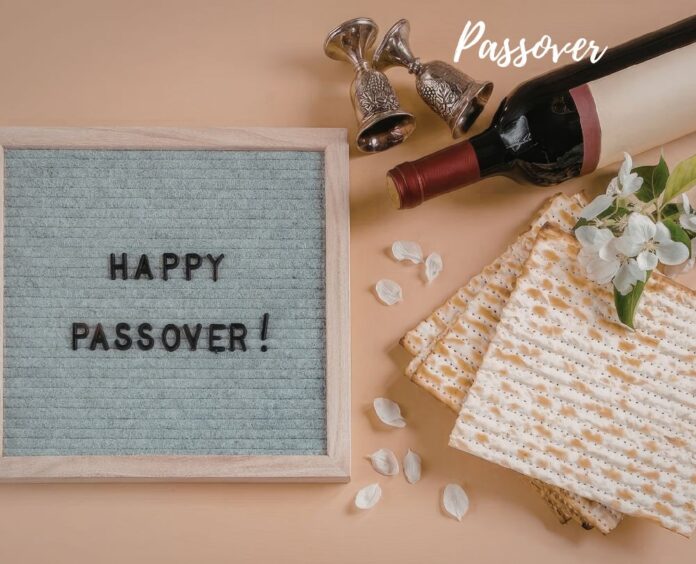
Passover 2027 begins at sundown on Wednesday, April 21, 2027, and ends at nightfall on Thursday, April 29, 2027 (Diaspora). In Israel, the holiday ends one day earlier, at nightfall on Wednesday, April 28, 2027.
The first Seder takes place on the evening of Wednesday, April 21. The second Seder (observed outside Israel) takes place on the evening of Thursday, April 22. The Hebrew date is 15–22 Nisan 5787.
Passover — Hebrew: פֶּסַח, Pesach — is a Jewish festival commemorating the Exodus of the Israelites from slavery in ancient Egypt.
It is the most widely observed Jewish holiday in the world and one of the three biblical pilgrimage festivals (shalosh regalim), alongside Shavuot and Sukkot.
This guide covers every dimension of Passover 2027: exact dates by region, candle lighting times by city, the complete 15-step Seder sequence, seder plate items and their meanings, chametz and kitniyot laws, preparation rituals, Sephardic and Ashkenazi customs, Mimouna, Easter 2027, and a full planning timeline.
Table of Contents
Passover 2027 Dates at a Glance
| Key Date | Detail |
|---|---|
| Erev Pesach (Passover Eve) | Wednesday, April 21, 2027 |
| First Seder | Evening of Wednesday, April 21, 2027 |
| Second Seder (Diaspora only) | Evening of Thursday, April 22, 2027 |
| Chol HaMoed begins | Friday, April 23, 2027 |
| Shabbat Chol HaMoed | Saturday, April 26, 2027 |
| Yom HaShoah 2027 | Tuesday, April 28, 2027 (within Passover week) |
| Last day of Passover in Israel | Wednesday, April 28, 2027 |
| Last day of Passover in Diaspora | Thursday, April 29, 2027 |
| Mimouna begins | Night of Thursday, April 29, 2027 |
| Hebrew year | 5787 |
Is Passover 7 Days or 8 Days in 2027?
Passover 2027 is 7 days in Israel and 8 days in Jewish communities outside Israel (the Diaspora). Israeli communities observe Yom Tov (full holiday restrictions) on April 21–22 and April 28.
Diaspora communities observe Yom Tov on April 21–22 and April 28–29. The intermediate days, April 23–27, are Chol HaMoed in both regions.
The one-day difference traces to the ancient practice of yom tov sheni shel galuyot — a second holiday day added outside Israel due to historical uncertainty about the precise new moon sighting that determined the calendar.
This practice was codified by the rabbis and retained even after the calendar was mathematically fixed in the 4th century CE.
Why Does Passover 2027 Fall in Late April?
Passover 2027 falls in late April because the Hebrew year 5787 is not a leap year and follows the non-leap year 5786, producing a later alignment with the Gregorian calendar.
The Hebrew calendar is lunisolar. Each month begins at the new moon, giving a standard year of 354 days — approximately 11 days shorter than the 365-day Gregorian solar year. To prevent Passover from drifting out of spring (as commanded in Deuteronomy 16:1), the Hebrew calendar inserts a 13th month, Adar II, in 7 of every 19 years. This 19-year cycle is known as the Metonic cycle.
Passover 2026 began on Wednesday, April 1, 2026. Because neither 5786 nor 5787 contains Adar II, the holiday advances approximately 20 days forward on the Gregorian calendar from 2026 to 2027.
| Year | Hebrew Year | Leap Year | Passover Start |
|---|---|---|---|
| 2025 | 5785 | Yes | Saturday, April 12, 2025 |
| 2026 | 5786 | No | Wednesday, April 1, 2026 |
| 2027 | 5787 | No | Wednesday, April 21, 2027 |
| 2028 | 5788 | Yes | Tuesday, April 10, 2028 |
| 2029 | 5789 | No | Sunday, March 31, 2029 |
Late April timing has practical implications for Passover travel programs. Resort seders scheduled for late April benefit from warmer temperatures across Mediterranean, Caribbean, and southern United States destinations, and from longer evening daylight during Chol HaMoed touring days (April 23–27).
What Is Passover? Meaning, History, and Significance
Passover commemorates the liberation of the Israelite people from slavery in ancient Egypt, as recorded in the Book of Exodus. The name derives from the biblical account in Exodus 12:23, in which God passed over (pasach, פָּסַח) the homes of the Israelites during the tenth and final plague, sparing their firstborn sons.
The holiday carries three Hebrew names, each emphasizing a distinct dimension:
- Pesach (פֶּסַח) — refers to the divine act of passing over
- Chag HaMatzot (חַג הַמַּצּוֹת) — Festival of Unleavened Bread, referencing the matzah eaten when the Israelites left in haste
- Zman Cheruteinu (זְמַן חֵרוּתֵנוּ) — Season of Our Freedom, marking the transition from slavery to nationhood
Passover is the most widely observed Jewish holiday globally. According to Pew Research Center data (2020), approximately 70% of American Jews attend a Seder, making it the single most practiced Jewish ritual in the United States, exceeding Yom Kippur fasting (53%) in participation rate.
The holiday is not only a historical commemoration. The Haggadah instructs each participant to regard themselves as personally having left Egypt: “In every generation, each person is obligated to see themselves as if they personally left Egypt” (Mishnah Pesachim 10:5). This framing makes Passover a living re-enactment rather than a historical memorial.
The Story of the Exodus
The Exodus narrative begins with the Israelites — descendants of Jacob, who had settled in Egypt during the era of Joseph — enslaved under a Pharaoh who “did not know Joseph” (Exodus 1:8). After generations of enslavement, Moses received a divine commission at the burning bush (Exodus 3) to demand their release.
Pharaoh refused nine times. Each refusal was followed by one of the ten plagues. The tenth plague — the death of the firstborn of Egypt — finally compelled Pharaoh to release the Israelites. The Israelites departed so rapidly that their bread dough did not have time to rise. They carried it unbaked on their shoulders and baked it as flat bread in the desert. This is the origin of matzah.
The Ten Plagues of Egypt
The ten plagues are recited during the Maggid section of the Seder. At each plague’s mention, participants remove a drop of wine from their cup — a gesture acknowledging that personal joy cannot be complete while others suffer, even enemies.
| Plague | Hebrew Name | Description |
|---|---|---|
| 1. Blood | Dam (דָּם) | The Nile and all water turned to blood |
| 2. Frogs | Tzfardea (צְפַרְדֵּעַ) | Frogs covered the land of Egypt |
| 3. Lice | Kinim (כִּנִּים) | Dust became lice throughout Egypt |
| 4. Wild Beasts | Arov (עָרֹב) | Swarms of wild animals invaded |
| 5. Livestock Disease | Dever (דֶּבֶר) | Egyptian livestock died; Israelite livestock was spared |
| 6. Boils | Sh’chin (שְׁחִין) | Festering boils afflicted Egyptians and animals |
| 7. Hail | Barad (בָּרָד) | Fire and hail fell simultaneously |
| 8. Locusts | Arbeh (אַרְבֶּה) | Locusts consumed remaining crops |
| 9. Darkness | Choshech (חֹשֶׁךְ) | Complete darkness covered Egypt for 3 days |
| 10. Death of the Firstborn | Makat Bechorot (מַכַּת בְּכוֹרוֹת) | Firstborn of Egypt died; Israelites were spared |
Passover 2027 Candle Lighting Times by City
Passover 2027 begins at sundown on Wednesday, April 21, 2027. Candle lighting is performed 18 minutes before sunset in each location.
Times vary by geographic latitude and local customs. The following times are approximate; you can verify exact times using Hebcal.com, Chabad.org, or MyZmanim.com.
| City | Approx. Candle Lighting | Timezone |
|---|---|---|
| New York, NY | 7:42 PM | EDT (UTC−4) |
| Los Angeles, CA | 7:38 PM | PDT (UTC−7) |
| Chicago, IL | 7:44 PM | CDT (UTC−5) |
| Miami, FL | 7:49 PM | EDT (UTC−4) |
| Toronto, ON | 7:55 PM | EDT (UTC−4) |
| London, UK | 8:19 PM | BST (UTC+1) |
| Tel Aviv, Israel | 7:17 PM | IDT (UTC+3) |
| Melbourne, Australia | 5:31 PM | AEST (UTC+10) |
The holiday concludes at tzeis hakochavim — the point at which three medium-sized stars become visible in the night sky, an astronomical threshold that marks the end of Shabbat and Yom Tov.
For Diaspora communities, Passover ends at nightfall on Thursday, April 29, 2027. Havdalah is recited at the close of the holiday.
Candle lighting on the second night (Thursday, April 22, 2027) must take place after nightfall to avoid violating Yom Tov of the first day.
New flames may not be kindled from scratch on Yom Tov; second-night candles must be lit from a pre-existing flame.
Passover 2027 and Easter 2027
Western Easter 2027 (Roman Catholic, Anglican, Lutheran, most Protestant denominations) falls on Sunday, March 28, 2027.
Eastern Orthodox churches observe Pascha five weeks later, on Sunday, May 2, 2027.
| Column | Date | Meaning |
|---|---|---|
| Full Moon | Monday, March 22, 2027 | The Paschal Full Moon — astronomical trigger |
| Jewish Passover | Thursday, April 22, 2027 | Nisan 15, commencing at sunset April 21 |
| Gregorian Easter | Sunday, March 28, 2027 | Western Christian (Roman Catholic, Anglican, Protestant) |
| Julian Easter | Sunday, May 2, 2027 | Eastern Orthodox Pascha |
Western Easter 2027 is Sunday, March 28 — 24 days before Passover begins. No overlap. The two holidays are entirely separate in 2027 for Western Christians.
Orthodox Pascha 2027 is Sunday, May 2 — 3 days after Passover ends in the Diaspora (April 29). No overlap there either.
For Western Easter 2027, the spring equinox falls on Saturday, March 20. The first full moon after the equinox — the Full Worm Moon — arrives on Monday, March 22. The following Sunday, March 28, is Easter.
The Council of Nicaea (325 CE) deliberately decoupled Easter from the Jewish calendar. The ruling stipulated that Easter should fall on the first Sunday after the first full moon on or after the spring equinox (fixed in ecclesiastical calculation to March 21), and not coincide with the Jewish Passover. Despite this, the two holidays frequently converge, as they do in 2027.
The Last Supper, as recorded in the Synoptic Gospels (Matthew 26, Mark 14, Luke 22), is presented as a Passover Seder or Passover meal on the night of 14–15 Nisan. This connection forms the theological basis for Christian interest in the Seder, including the practice of Messianic Passover Seders, which interpret Seder elements through a Christological framework.
For interfaith households observing both holidays in 2027, Easter Sunday falls during Chol HaMoed, when Passover dietary restrictions remain in effect. Standard Easter foods — hot cross buns, leavened breads, beer — are chametz and are not permissible in a kosher-for-Passover household during this period.
The Complete Passover 2027 Seder Guide
A Passover Seder is a ritual meal conducted on the first night (and second night, in the Diaspora) of Passover, structured around 15 prescribed steps and guided by a liturgical text called the Haggadah. The word seder (סֵדֶר) means “order” in Hebrew. The word Haggadah (הַגָּדָּה) means “the telling.”
The Seder is not primarily a dinner. It is a participatory re-enactment of the Exodus. The meal does not appear until Step 11. The preceding steps involve blessings, handwashing, eating symbolic foods, retelling the Exodus narrative, singing, and reciting the Hallel psalms.
Seder duration varies significantly by household and Haggadah used:
- A traditional full-commentary Seder: 3–5 hours
- A standard contemporary Diaspora Seder: 2–3 hours
- An abbreviated Seder using a condensed Haggadah: 60–90 minutes
The Seder requires a minimum of 4 cups of wine or grape juice per participant. Each cup corresponds to one of the four expressions of divine redemption in Exodus 6:6–7. The Haggadah must be provided to every participant.
The 15 Steps of the Passover Seder
The 15 steps are traditionally memorized through a mnemonic verse recited at the beginning of the Seder. The Hebrew names, transliterations, and ritual actions are as follows:
- Kadeish (קַדֵּשׁ) — Recite Kiddush and drink the first cup of wine, while reclining to the left.
- Urchatz (וּרְחַץ) — Wash hands without reciting a blessing. This preparatory washing precedes the handling of karpas.
- Karpas (כַּרְפַּס) — Dip a green vegetable (parsley, celery, or boiled potato) in salt water and eat less than a k’zayit (olive-bulk, approximately 28 grams).
- Yachatz (יַחַץ) — Break the middle matzah of the three on the Seder table. Return the smaller piece. Wrap the larger piece — the afikomen — and hide it for children to find later.
- Maggid (מַגִּיד) — Recite the Exodus retelling. This is the longest step, encompassing Ha Lachma Anya, the Four Questions, the Four Children, the ten plagues, and Dayenu. Drink the second cup at its conclusion.
- Rochtzah (רָחְצָה) — Wash hands a second time, with the standard blessing (al netilat yadayim). This is the formal pre-meal handwashing.
- Motzi (מוֹצִיא) — Recite the standard bread blessing (Hamotzi lechem min ha’aretz) over the matzah.
- Matzah (מַצָּה) — Recite the Passover-specific matzah blessing (al achilat matzah) and eat a minimum of a k’zayit of matzah while reclining.
- Maror (מָרוֹר) — Recite the blessing and eat bitter herbs — typically freshly grated horseradish root — at a minimum of a k’zayit.
- Korech (כּוֹרֵךְ) — Combine matzah and maror in a sandwich and eat. This practice follows the Talmudic-era sage Hillel, who combined the Passover sacrifice, matzah, and bitter herbs per Numbers 9:11.
- Shulchan Orech (שֻׁלְחָן עוֹרֵךְ) — Serve and eat the festive Passover meal.
- Tzafun (צָפוּן) — Retrieve the afikomen (children often negotiate a prize for its return). Every participant eats a piece while reclining. The afikomen must be eaten before midnight. No food is consumed afterward.
- Barech (בָּרֵךְ) — Recite Birkat HaMazon (Grace After Meals). Fill Elijah’s Cup. Drink the third cup of wine.
- Hallel (הַלֵּל) — Recite or sing Psalms 113–118. Open the door for Elijah. Drink the fourth cup. Sing closing songs including Chad Gadya and Echad Mi Yodea.
- Nirtzah (נִרְצָה) — Conclude the Seder. Declare: L’Shana HaBa’ah B’Yerushalayim — “Next Year in Jerusalem.”
The Four Questions (Mah Nishtanah)
The Four Questions (Mah Nishtanah, מַה נִּשְׁתַּנָּה) are recited by the youngest child present and serve as the prompt that launches the Exodus retelling in Maggid. They are not asked to receive individual answers. Their function is pedagogical: to prompt the adult response that constitutes the Haggadah’s central narrative.
The opening line — “Why is this night different from all other nights?” — is followed by four specific observations:
- On all other nights, we eat leavened bread or matzah. Tonight, only matzah.
- On all other nights, we eat all vegetables. Tonight, bitter herbs.
- On all other nights, we do not dip even once. Tonight, we dip twice.
- On all other nights, we eat sitting upright or reclining. Tonight, we all recline.
When no child is present, an adult recites the Four Questions. When a child cannot read Hebrew, the questions may be asked in any language. The Aramaic-Hebrew text has remained largely unchanged since the Talmudic period (compiled approximately 3rd–5th century CE).
The Four Cups of Wine
The four cups of wine represent the four expressions of divine redemption found in Exodus 6:6–7. Each cup is drunk at a prescribed point in the 15-step sequence. The minimum volume for each cup is a revi’it — approximately 86–100 ml depending on the halakhic authority followed.
| Cup | Seder Step | Biblical Phrase (Exodus 6:6–7) |
|---|---|---|
| First Cup | Kadeish | “I will take you out” |
| Second Cup | End of Maggid | “I will save you” |
| Third Cup | Barech | “I will redeem you” |
| Fourth Cup | End of Hallel | “I will take you to Me” |
Elijah’s Cup (Kos Eliyahu) — a fifth cup, filled at Step 13 but not drunk by participants — symbolizes the unresolved messianic future. The door is opened for Elijah during Hallel in anticipation of his arrival, which Jewish tradition associates with the coming of the Messianic era (Malachi 3:23).
Miriam’s Cup (Kos Miriam) — filled with water — is a modern addition honoring Miriam, sister of Moses, who led the women in song after the crossing of the Red Sea (Exodus 15:20–21). Miriam’s Cup is not a halakhic requirement. Its inclusion is a matter of individual or communal practice, more common in liberal and egalitarian Seder settings.
Grape juice is a fully valid substitute for wine. It is standard for children and for adults who do not consume alcohol.
How to Choose a Haggadah for Passover 2027
The Haggadah selected determines the Seder’s length, tone, theological depth, and suitability for different audiences. The Maxwell House Haggadah, distributed since 1932 with over 50 million copies in circulation, is the most widely used Haggadah in North American Jewish households — but it contains no commentary and is not well suited to first-time guests or children without supplementation.
| Haggadah | Best For | Approximate Length | Notes |
|---|---|---|---|
| Maxwell House | Traditional Ashkenazi; experienced participants | 2.5–4 hours | No commentary; free with Maxwell House products |
| Artscroll Complete Seder Haggadah | Orthodox; serious halakhic and Midrashic study | 3–5 hours | Detailed commentary; Hebrew/English |
| Chabad Haggadah | Chabad observance; depth-seeking beginners | 2.5–4 hours | Chassidic commentary; full transliteration |
| My Jewish Learning (free download) | Interfaith; liberal households | 1.5–2.5 hours | Accessible English; free PDF |
| The 30-Minute Seder | Families with young children or elderly guests | 30–60 minutes | Preserves structure; abbreviates commentary |
| PJ Library Haggadah | Children aged 3–8 | 45–90 minutes | Illustrated; interactive activities |
| New American Haggadah (Jonathan Safran Foer, ed.) | Literary; culturally engaged secular Jews | 2–3 hours | Nathan Englander translation; modern commentary |
| A Different Night (Noam Zion) | Discussion-oriented Seders | 2.5–4 hours | Multiple voices; participatory |
| The Women’s Seder Sourcebook | Feminist-oriented households | Variable | Amplifies women’s voices in the Exodus narrative |
One Haggadah per participant is required for full Seder participation. For Seders with mixed audiences — observant and non-observant guests together — the My Jewish Learning or New American Haggadah typically achieves the broadest accessibility without sacrificing ritual structure.
The Seder Plate: Every Item and Its Meaning
The seder plate (ke’arah, קְעָרָה) is the central ceremonial object of the Passover table, holding six symbolic foods referenced and consumed during the Seder’s ritual sequence. It is not a serving dish. The quantities on the seder plate are symbolic. Each item is consumed at a specific Seder step, not as part of the general meal.
The Six Seder Plate Items
Maror — Bitter Herbs
Maror (מָרוֹר) represents the bitterness of Israelite slavery. It is consumed at Step 9 (Maror) and again at Step 10 (Korech). A minimum of a k’zayit (approximately 28–30 grams) must be eaten to fulfill the biblical commandment.
The most common forms are freshly grated white horseradish root (chrain) in Ashkenazi households, and romaine lettuce in many Sephardic communities and among halakhic authorities, including Maimonides, who preferred romaine because it grows increasingly bitter as it matures — mirroring the escalating hardship of enslavement.
Commercially prepared white horseradish in jars is acceptable if it bears kosher-for-Passover (KFP) certification. Red horseradish (mixed with beets) is used in some Ashkenazi households.
Charoset — The Sweet Paste
Charoset (חֲרוֹסֶת) represents the mortar used by Israelite slaves in Egyptian construction. Its sweet taste is a deliberate contrast to the maror’s bitterness. Preparation varies substantially by community:
| Community | Primary Ingredients |
|---|---|
| Ashkenazi | Grated apple, crushed walnuts, cinnamon, sweet red wine |
| Moroccan | Dates, raisins, almonds, cinnamon, orange juice |
| Yemenite | Dates, sesame seeds, ginger, pomegranate |
| Persian | Dried fruits, pistachios, pomegranate juice |
| Israeli Sephardic | Dates, figs, walnuts, red wine |
Karpas — The Green Vegetable
Karpas (כַּרְפַּס) represents spring, renewal, and the hope present even in suffering. Parsley, celery, or boiled potato is dipped in salt water (symbolizing tears) and eaten at Step 3. Less than a k’zayit is consumed to avoid the requirement of a formal after-blessing (birkat hamazon).
Zeroa — The Shank Bone
Zeroa (זְרוֹעַ) represents the Korban Pesach — the Passover lamb sacrifice offered in the Temple in Jerusalem. It is displayed on the seder plate but not eaten. Since the destruction of the Second Temple in 70 CE, the sacrifice cannot be performed; the zeroa serves as a memorial.
A roasted lamb shank bone or chicken neck is standard. Vegetarians and vegans commonly substitute a roasted beet (selek), a substitution accepted by the Talmudic authority Rav (Pesachim 114b).
Beitzah — The Roasted Egg
Beitzah (בֵּיצָה) symbolizes the chagigah (Festival offering) brought to the Temple and, in many traditions, mourning for the Temple’s destruction. The egg is hard-boiled and then lightly charred or roasted. In many Ashkenazi households, the egg is dipped in salt water at the start of Shulchan Orech (the meal).
Chazeret — The Second Bitter Herb
Chazeret (חֲזֶרֶת) is a second bitter herb — typically romaine lettuce — used specifically for the Korech sandwich at Step 10. It is listed in the Mishnah (Pesachim 2:6) as one of five vegetables permitted for the maror obligation. Chazeret is frequently omitted from popular depictions of the seder plate but is halakhically required by many authorities.
The Orange on the Seder Plate
The orange is a modern, non-halakhic addition to the seder plate, associated with Professor Susannah Heschel of Dartmouth College, originating from a statement she made at Oberlin College in 1984. It signifies inclusion — specifically, the presence and dignity of groups historically marginalized within Jewish community life. Its inclusion is a matter of individual and household practice.
The widely circulated version of this story — that a rabbi told Heschel to “put a crust of bread on the seder plate,” which she replaced with an orange — is inaccurate. By Heschel’s own account, she originated the practice herself.
The orange does not appear in any traditional Haggadah and carries no halakhic status.
Passover Food Laws: Chametz, Kitniyot, and Kosher-for-Passover Standards
What Is Chametz?
Chametz (חָמֵץ) is any leavened food made from one of five grains — wheat, barley, rye, oats, or spelt — that has come into contact with water and been allowed to ferment for more than 18 minutes. The prohibition on chametz during Passover is one of the most stringent in Jewish law.
Unlike standard dietary prohibitions, chametz that is merely owned — not consumed — by a Jew during Passover becomes permanently forbidden after the holiday under the rabbinic ruling known as chametz she’avar alav haPesach. This is why selling or destroying chametz before the holiday begins is obligatory, not optional, for observant Jews.
The 18-minute threshold distinguishes chametz from matzah. Matzah is also made from one of these five grains, but it is baked under controlled conditions within 18 minutes of water contact, preventing fermentation.
What Is Kitniyot? Ashkenazi vs. Sephardic Rules
Kitniyot (קִטְנִיּוֹת) refers to legumes and related foods — including rice, corn, beans, lentils, peas, sesame, mustard, and sunflower seeds — whose consumption during Passover is restricted for Ashkenazi Jews but fully permitted for Sephardic and Mizrahi Jews.
The kitniyot prohibition is not biblical. It originated as a medieval Ashkenazi custom, traceable to approximately the 13th century CE, based on concern that these items were stored or processed alongside the five chametz grains and could cause confusion. Sephardic halakhic authorities never adopted this restriction.
In 2016, the Committee on Jewish Law and Standards (CJLS) of the Conservative movement issued a teshuvah (halakhic ruling) permitting Ashkenazi Conservative Jews to consume kitniyot during Passover.
The Reform movement does not apply the kitniyot restriction. Ashkenazi Orthodox practice varies: many authorities permit kitniyot for the elderly, ill, or those experiencing significant dietary hardship.
Complete Passover 2027 Dietary Reference
| Food | Ashkenazi | Sephardic | Notes |
|---|---|---|---|
| Matzah (KFP certified) | ✓ Permitted | ✓ Permitted | Must bear kosher-for-Passover certification |
| Shmura matzah | ✓ Permitted | ✓ Permitted | Hand or machine; preferred for the Seder |
| Rice | ✗ Kitniyot (traditionally) | ✓ Permitted | Conservative movement permits for Ashkenazi (2016) |
| Quinoa (KFP certified) | ✓ Permitted | ✓ Permitted | Requires KFP certification for cross-contamination |
| Corn / corn syrup | ✗ Kitniyot | ✓ Permitted | Includes cornstarch, corn oil |
| Legumes (beans, lentils, peas) | ✗ Kitniyot | ✓ Permitted | — |
| Eggs | ✓ Permitted | ✓ Permitted | No special certification required |
| Wine (KFP certified) | ✓ Permitted | ✓ Permitted | Must bear OU-P or equivalent |
| Beer | ✗ Chametz | ✗ Chametz | Made from barley or wheat |
| Pasta | ✗ Chametz | ✗ Chametz | Wheat-based; prohibited for all |
| Standard leavened bread | ✗ Chametz | ✗ Chametz | Prohibited for all |
| Peanuts | ✗ Kitniyot (many communities) | ✓ Permitted | Ashkenazi practice varies |
| Raw nuts (certified) | ✓ Permitted | ✓ Permitted | Pre-ground requires KFP certification |
| Quinoa (uncertified) | ✗ Not recommended | ✗ Not recommended | Cross-contamination risk in shared facilities |
Is Quinoa Kosher for Passover?
Quinoa (Chenopodium quinoa) is kosher for Passover with a kosher-for-Passover certification. Quinoa is a seed, not a grain. It is not related to any of the five chametz grains and does not ferment when exposed to water within the 18-minute threshold that defines chametz. The Orthodox Union (OU) issued a written ruling in 2013 confirming quinoa’s permissibility on Passover. The Star-K reached the same conclusion.
The certification requirement exists solely because quinoa is frequently processed in shared facilities with wheat or other chametz grains. Uncertified quinoa carries a cross-contamination risk. Certified brands include Bob’s Red Mill (when carrying OU-P) and others that undergo separate Passover production runs.
Kosher-for-Passover Coca-Cola: The Yellow Cap
Kosher-for-Passover Coca-Cola is distinguished by a yellow cap and is produced with cane sugar rather than high-fructose corn syrup. Standard American Coca-Cola uses high-fructose corn syrup derived from corn, which falls under the Ashkenazi kitniyot restriction. The cane sugar formulation carries OU-P certification and replicates Coca-Cola’s original recipe.
Yellow-cap Kosher-for-Passover Coca-Cola typically appears in major metropolitan areas with significant Jewish populations approximately 3–4 weeks before Passover. In 2027, availability in New York, Los Angeles, Chicago, Miami, and Toronto is expected beginning in late March.
How to Prepare for Passover 2027: Rituals, Timeline, and Checklist
The Three Pre-Passover Rituals
Three distinct rituals govern the removal of chametz before Passover begins. Each has a specific date, procedure, and legal purpose.
Bedikat Chametz — The Search for Chametz
Bedikat chametz (בְּדִיקַת חָמֵץ) is performed on the night of Tuesday, April 20, 2027 — the night before Passover eve. When Passover begins on Wednesday night (as in 2027), the search is moved forward to Tuesday night to avoid having chametz in the home on Passover eve while still allowing time for its disposal.
The search is traditionally conducted by candlelight, using a candle, a feather, a wooden spoon, and a paper bag to collect what is found. A blessing is recited before beginning:
Baruch atah Adonai, Eloheinu melech haolam, asher kid’shanu b’mitzvotav v’tzivanu al biur chametz.
After the search, a declaration of nullification (kol chamira) is recited, rendering any chametz inadvertently overlooked as legally ownerless dust of the earth.
Many households place 10 small pieces of known chametz around the house before the search to ensure the blessing does not constitute a potentially false blessing if nothing is found.
Biur Chametz — Burning the Chametz
Biur chametz (בִּיעוּר חָמֵץ) is performed on the morning of Wednesday, April 21, 2027, before the end of the fifth halakhic hour (sha’ah chamishit) — approximately 10:30–11:00 AM local time. All chametz found during bedikat chametz, plus any remaining chametz in the home, is burned. A second, more comprehensive nullification declaration (kol chamira) is recited after burning.
Local biur chametz deadlines for Wednesday, April 21, 2027, vary by sunrise time and latitude. Exact deadlines are available at MyZmanim.com or Chabad.org’s zmanim tool using the specific address.
Mechirat Chametz — Selling the Chametz
Mechirat chametz (מְכִירַת חָמֵץ) is a complete legal sale of chametz that cannot feasibly be consumed or destroyed before Passover — such as expensive whisky, bulk grains, or commercial chametz inventory — to a non-Jew, conducted through a rabbi.
The sale constitutes a full halakhic transfer of ownership for the duration of Passover. The chametz is typically stored in a sealed area of the home. After Passover, the rabbi repurchases it on behalf of the community.
The deadline for completing mechirat chametz is before the sha’ah chamishit on Wednesday, April 21, 2027. Online mechirat chametz services are available through Chabad.org, the OU (ou.org), and most congregational synagogues.
Passover 2027 Preparation Timeline
| Timeframe | Actions |
|---|---|
| November 2026 – January 2027 | Order shmura matzah (hand or machine); book Passover programs; order specialty KFP ingredients from online retailers |
| February 2027 | Purchase Haggadot (one per participant); begin deep-cleaning kitchen; order or purchase Passover dishes if needed |
| March 1–15, 2027 | Complete chametz grocery use-down; begin Passover shopping; start cooking and freezing brisket, matzah balls, kugel |
| March 16 – April 14, 2027 | Complete mechirat chametz arrangements with a rabbi; finalize Seder guest list and Haggadah selection |
| April 15–20, 2027 | Finish chametz removal; seal chametz in storage area if selling; prepare seder table items |
| Tuesday, April 20, 2027 (night) | Perform bedikat chametz with candle, feather, wooden spoon, and paper bag |
| Wednesday, April 21, 2027 (morning) | Perform biur chametz before ~10:30–11:00 AM local time; complete final seder table setup |
| Wednesday, April 21, 2027 (sundown) | Passover begins — First Seder |
| Thursday, April 22, 2027 (evening) | Second Seder (Diaspora only) |
| Thursday, April 29, 2027 (nightfall) | Passover ends in Diaspora; Mimouna celebrations begin |
Passover 2027 Seder Setup Checklist
The following items are required for a complete and halakhically valid Seder table:
- Shmura matzah — 3 whole matzot for the seder plate; additional supply for the meal. Shmura matzah is matzah in which the wheat has been guarded (shmura) from moisture from the time of harvest. Hand-shmura matzah is preferred by many authorities for use at the Seder itself.
- Horseradish — fresh root (preferred) or KFP-certified prepared jar
- Parsley, celery, or boiled potato — for karpas
- Eggs — for beitzah on the seder plate and for the meal
- Shank bone or chicken neck — for zeroa; or roasted beet for vegetarian/vegan households
- Charoset ingredients — apples, walnuts, cinnamon, sweet red wine (Ashkenazi); or dates, dried fruits, nuts (Sephardic)
- Salt water — prepared in small bowls for the table
- Wine or grape juice — minimum 4 cups per adult (approximately 86–100 ml per cup); at least 1 bottle per 3–4 adults as a baseline
- Haggadah — one per participant
- Elijah’s Cup (Kos Eliyahu) — a dedicated wine glass, unfilled until Step 13
- Miriam’s Cup (Kos Miriam, optional) — a cup filled with water
- Seder plate (ke’arah) — holding all six seder items
- Matzah tray or matzah cover — for the 3 shmura matzot
- Pillows or cushions — for reclining during the four cups and while eating matzah
Passover Greetings 2027
The standard greeting for Passover is Chag Sameach (חַג שָׂמֵחַ), meaning “Happy Holiday.” It is appropriate throughout the 8-day holiday. A Passover-specific form, Chag Pesach Sameach (חַג פֶּסַח שָׂמֵחַ), is also used. The English phrase “Happy Passover” is widely understood and fully appropriate.
| Greeting | Hebrew | Transliteration | Appropriate Usage |
|---|---|---|---|
| Happy Holiday | חַג שָׂמֵחַ | Chag Sameach | Throughout Passover; universal |
| Happy Passover | חַג פֶּסַח שָׂמֵחַ | Chag Pesach Sameach | Passover-specific; any day of the holiday |
| Joyous Festivals | מוֹעֲדִים לְשִׂמְחָה | Moadim L’Simcha | Chol HaMoed (intermediate days, April 23–27) |
| Good Yom Tov | יוֹם טוֹב | Gut Yom Tov | Ashkenazi usage on Yom Tov days specifically |
During Chol HaMoed (April 23–27, 2027), the greeting Moadim L’Simcha is used in many communities. The traditional response is Chagim U’Zmanim L’Sasson.
The phrase “Happy Easter” is not an appropriate greeting for someone observing Passover.
Passover for First-Time Seder Guests and Interfaith Families
First-time Seder guests require no prior knowledge of Jewish practice. The Seder is structured around guided participation — the Haggadah, provided to every participant, leads the group through each step in sequence. Guests are invited to read aloud, ask questions, and follow along.
What to Expect at Your First Seder
- Duration: A typical Diaspora Seder runs 2–4 hours. Highly observant households may extend to 5 hours with full commentary. Seders using abbreviated Haggadot may finish in 90 minutes.
- Language: Portions are in Hebrew and Aramaic. Modern Haggadot include English translation and transliteration throughout. Guests are not expected to read Hebrew.
- Food timing: The meal does not appear until Step 11 (Shulchan Orech). Before that, small ritual amounts of karpas, matzah, and bitter herbs are consumed. Guests who are unaware of this often arrive hungry and should eat a small snack beforehand.
- Wine: Four cups are drunk. Grape juice is a standard substitute. Declining or drinking partial cups is acceptable.
- Participation: Guests are typically invited to read aloud from the Haggadah. Passing or reading in English rather than Hebrew is entirely acceptable.
- Dress code: Smart-casual to semi-formal in most households. More observant families typically maintain a formal dinner standard. Contacting the host in advance is advisable.
What to Bring to a Passover Seder
| Gift Category | Appropriate Options | What to Avoid |
|---|---|---|
| Wine | Kosher-for-Passover wine or grape juice (OU-P certified) | Standard wine without KFP certification |
| Food | KFP-certified chocolates; certified macaroons | Any chametz: bread, crackers, beer, standard cake or cookies |
| Flowers | Fresh flowers | — |
| Judaica | Seder plate; Elijah’s Cup; decorative matzah cover | — |
| Children | Passover-themed books; afikomen prizes | — |
When selecting wine, the OU-P symbol (Orthodox Union with “P”) is the most widely recognized kosher-for-Passover certification in North America. Israeli wines under Mevushal certification are also typically KFP-certified.
Sephardic and Ashkenazi Passover: Key Differences
Sephardic and Ashkenazi Passover observances differ most significantly in food customs, seder plate arrangements, Haggadah traditions, and post-Passover celebrations.
Most English-language Passover content is written from an Ashkenazi perspective. Sephardic and Mizrahi communities — including Moroccan, Yemenite, Persian, Iraqi, and Syrian Jews — maintain distinct and equally authoritative traditions.
| Category | Ashkenazi | Sephardic/Mizrahi |
|---|---|---|
| Kitniyot (rice, legumes, corn) | Prohibited (traditionally) | Permitted |
| Charoset | Apple, walnut, cinnamon, sweet red wine | Dates, dried fruits, nuts, pomegranate (varies by community) |
| Zeroa | Lamb shank or chicken neck | Lamb shank (preferred in many Sephardic traditions) |
| Maror | Freshly grated white horseradish root | Romaine lettuce (preferred by many authorities) |
| Haggadah melodies | Ashkenazi chant traditions (e.g., Maoz Tzur; Chad Gadya) | Distinct Sephardic/Ladino/Arabic-influenced melodies |
| Post-Passover | No specific celebration | Mimouna (Moroccan); various community celebrations |
| Seder plate arrangement | Varies; typically follows Maharal or Ari layout | Varies by community; some use a tray format |
Notable Sephardic and Mizrahi customs include: Yemenite Jews reciting the Hallel psalms with unique melodic traditions; Persian Jews symbolically hitting each other with green onions during the singing of Dayenu (representing the whips of Egyptian slave drivers); and Moroccan Jews conducting an elaborate Mimouna celebration the night Passover ends.
Mimouna 2027: The Post-Passover Celebration
Mimouna (מימונה) is a Moroccan Jewish celebration held on the night Passover ends. In 2027, Mimouna begins at nightfall on Thursday, April 29. It marks the transition back to leavened food with open houses, communal feasting, music, and festivity.
The etymology of Mimouna is debated across three main theories: the Arabic maymuna (fortunate, blessed), the Hebrew emunah (faith), and a connection to Rabbi Maimon ben Joseph, the father of Maimonides, whose yahrtzeit (death anniversary) falls on 22 Nisan.
Traditional Mimouna foods and symbols include:
- Mofletta — thin crepes eaten warm with honey and butter, symbolizing the return to leavened food
- Marzipan and almond-based sweets — reflecting the abundance of North African Jewish confectionery traditions
- Couscous — a return to the staple grain of Moroccan Jewish cuisine
- Milk and honey — placed on the table as symbols of blessing and the Promised Land
- Live fish in a bowl — present in some Moroccan families as a symbol of fertility and abundance
Mimouna originated in the Jewish communities of Morocco, particularly Fez and Marrakesh, and spread through the Sephardic diaspora. In Israel, where over 1 million Jews trace Moroccan ancestry, Mimouna has become a national cultural event. Israeli political leaders regularly attend public Mimouna gatherings. Concerts, street celebrations, and open parks characterize Mimouna day (April 30, 2027) across Israeli cities.
English-language SEO and media coverage of Mimouna is substantially lower than its cultural significance warrants. This represents one of the largest content gaps in Passover-related publishing.
Passover 2027 Travel and Programs
Passover programs (also called Pesach programs) are all-inclusive resort events organized for observant Jewish families during the Passover week. Guests stay in a hotel or resort that has been fully kashered for Passover, with all food preparation, Seder nights, and Chol HaMoed programming provided by the organizer.
The late April 2027 timing is particularly advantageous for Passover programs. Mediterranean resorts in Spain, Portugal, Italy, and Greece experience warmer temperatures and lower crowds in late April than in early April. Caribbean and Florida resort programs benefit from the late-season timing as well.
Programs typically fill 12–18 months in advance. For Passover 2027, program bookings opened in mid-to-late 2025. By the time of publication, available spots in top-tier programs may be limited.
Popular program destinations for Passover 2027 include:
- Florida: Boca Raton, Miami Beach, Orlando (year-round warm; strong Ashkenazi and Sephardic program infrastructure)
- Caribbean: Cancún, Aruba, Punta Cana (beach-focused; popular with younger families)
- Mediterranean: Barcelona, Lisbon, Rome, Athens (cultural touring during Chol HaMoed; April is peak sightseeing weather)
- Israel: Jerusalem, Tel Aviv, Dead Sea resorts (observes 7-day Passover; direct connection to the holiday’s geography)
Chol HaMoed 2027 (April 23–27) is the primary touring window. These five days carry intermediate-level restrictions — work prohibited for many categories, but travel, recreation, and sightseeing are fully permitted.
Jewish Holidays Around Passover 2027
Passover sits within a broader spring sequence of Jewish Holiday observances. The following dates are relevant for calendar planning:
| Holiday | 2027 Date | Relationship to Passover |
|---|---|---|
| Purim | Wednesday, March 3, 2027 | 30 days before Passover; marks the start of Passover preparation (shloshim yom kodem) |
| Shabbat HaGadol | Saturday, April 17, 2027 | The Shabbat immediately before Passover; rabbis traditionally deliver a special halachic lecture |
| Passover begins | Wednesday, April 21, 2027 | — |
| Counting the Omer begins | Night of Thursday, April 22, 2027 | 49-day count from second Seder night to Shavuot |
| Yom HaShoah (Holocaust Remembrance Day) | Tuesday, April 28, 2027 | Falls during Passover week in 2027 |
| Passover ends (Diaspora) | Thursday, April 29, 2027 | — |
| Pesach Sheni (Secondary Passover) | Wednesday, May 19, 2027 | 14 Iyar; for those who could not observe Passover |
| Yom HaZikaron (Memorial Day, Israel) | Tuesday, May 11, 2027 | — |
| Yom HaAtzmaut (Israeli Independence Day) | Wednesday, May 12, 2027 | — |
| Shavuot | Wednesday, June 9 – Thursday, June 10, 2027 | 49 days after the second Seder night (counting from April 22) |
Counting the Omer (Sefirat HaOmer) begins on the night of Thursday, April 22, 2027, and continues for 49 consecutive days until Shavuot. Each day’s count is recited after nightfall.
The 49-day period connects Passover (redemption from Egypt) to Shavuot (the giving of the Torah at Sinai), framing the two holidays as the beginning and culmination of the same redemptive arc.
Frequently Asked Questions About Passover 2027
When does Passover 2027 start and end?
Passover 2027 begins at sundown on Wednesday, April 21, 2027, and ends at nightfall on Thursday, April 29, 2027 (Diaspora). In Israel, it ends at nightfall on Wednesday, April 28, 2027. The first Seder is on the evening of April 21. The second Seder (Diaspora only) is on the evening of April 22.
What is the difference between Passover and Pesach?
Passover and Pesach refer to the same holiday. Pesach (פֶּסַח) is the Hebrew name. Passover is the English translation of the biblical concept of God “passing over” the homes of the Israelites during the tenth plague (Exodus 12:23). Both terms are in standard use. Pessach, Pessah, and Pesaj are spelling variants used in German, French, and Spanish-speaking Jewish communities, respectively.
What is Chol HaMoed?
Chol HaMoed (חוֹל הַמּוֹעֵד) means “the weekdays of the festival.” It refers to the intermediate days of Passover — April 23–27, 2027 — that fall between the full Yom Tov days at the holiday’s start and end. On Chol HaMoed, most work is restricted for observant Jews, but the restrictions are less comprehensive than on Yom Tov. Travel, recreation, and family activities are fully permitted. Special Hallel prayers and Torah readings distinguish these days liturgically.
Can non-Jews attend a Passover Seder?
Non-Jews are frequently invited to Passover Seders and participate fully. The Haggadah explicitly extends an invitation: “Let all who are hungry come and eat” (Ha Lachma Anya, Aramaic). Non-Jewish guests are expected to follow along in the Haggadah, participate in readings if invited, and observe the Passover dietary restrictions during the meal (no chametz). No prior knowledge is required.
What is the afikomen?
The afikomen (אֲפִיקוֹמָן) is the larger half of the middle matzah, broken and hidden at Step 4 (Yachatz) of the Seder. It is retrieved at Step 12 (Tzafun) — typically by children who have found or “stolen” it — and every participant must eat a piece before midnight. Nothing is eaten or drunk (except the remaining cups of wine) after the afikomen. Its taste is meant to be the last of the evening. The word afikomen derives from the Greek epikomion, meaning “after-dinner entertainment” or “dessert.”
Is Passover a public holiday?
Passover is a public holiday in Israel, where the first and last days (April 21 and April 28, 2027) are national public holidays with school and most businesses closed. In the United States, Canada, and the United Kingdom, Passover is not a public holiday. Jewish students and employees in these countries typically request religious accommodation for the Seder nights and, in some communities, for the first two and last two days of the holiday.
Passover 2028 and Future Dates
| Year | Hebrew Year | Passover Begins | Passover Ends (Diaspora) |
|---|---|---|---|
| 2027 | 5787 | Wednesday, April 21, 2027 | Thursday, April 29, 2027 |
| 2028 | 5788 | Tuesday, April 10, 2028 | Wednesday, April 18, 2028 |
| 2029 | 5789 | Sunday, March 30, 2029 | Monday, April 7, 2029 |
| 2030 | 5790 | Thursday, April 17, 2030 | Friday, April 25, 2030 |
| 2031 | 5791 | Tuesday, April 8, 2031 | Wednesday, April 16, 2031 |
Passover 2028 begins on Tuesday, April 10 — eleven days earlier than 2027. The Hebrew year 5788 is a leap year containing Adar II, which shifts the Gregorian alignment forward. Passover 2029 (Sunday, March 30) will be the earliest Passover date in the 2020s decade.

