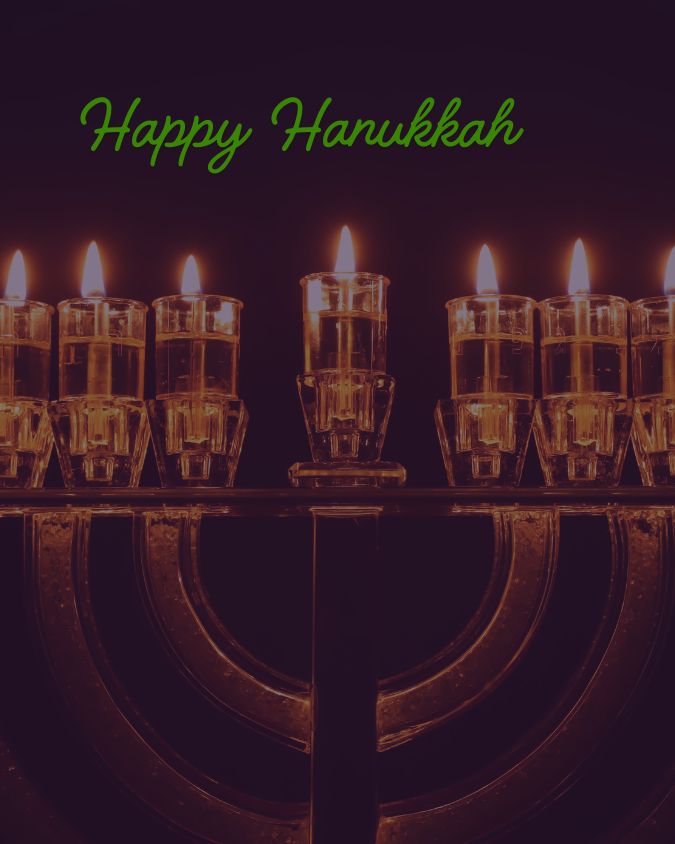
Hanukkah 2026 begins at sundown on Friday, December 4, 2026, and ends at nightfall on Saturday, December 12, 2026, spanning the 25th day of Kislev through the 2nd or 3rd day of Tevet on the Hebrew calendar (Hebcal, 2026). The holiday falls in the Hebrew year 5787 and lasts eight consecutive nights.
This guide covers the exact 2026 dates, the historical origin of the holiday, candle-lighting procedure, traditional foods, gift customs, and comparisons with other winter holidays.
Table of Contents
Hanukkah 2026 Dates: Full Calendar and Timing
Hanukkah 2026 runs for eight nights, starting Friday, December 4, 2026, and concluding Saturday, December 12, 2026. Each night adds one candle to the menorah until all eight branches are lit on the final night.
Night-by-Night Hanukkah 2026 Calendar
The table below lists every candle-lighting date for Hanukkah 2026, verified against Hebcal’s Hebrew calendar conversion (Hebcal, 2026).
| Night | Gregorian Date | Day of Week | Candles Lit (incl. shamash) |
|---|---|---|---|
| 1 | Friday, December 4, 2026 | Friday | 2 |
| 2 | Saturday, December 5, 2026 | Saturday | 3 |
| 3 | Sunday, December 6, 2026 | Sunday | 4 |
| 4 | Monday, December 7, 2026 | Monday | 5 |
| 5 | Tuesday, December 8, 2026 | Tuesday | 6 |
| 6 | Wednesday, December 9, 2026 | Wednesday | 7 |
| 7 | Thursday, December 10, 2026 | Thursday | 8 |
| 8 | Friday, December 11, 2026 | Friday | 9 |
The holiday itself concludes at nightfall on Saturday, December 12, 2026, when the eighth day ends. Because eight consecutive nights span exactly seven days, the first and eighth nights of any Hanukkah always fall on the same day of the week.
For 2026, this means both the first night (December 4) and the eighth night (December 11) fall on Friday, requiring the Hanukkah candles to be lit before Shabbat candles begin at sundown on both dates.
Some sources describe the Shabbat overlap differently depending on whether they count the concluding day (Saturday, December 12) as part of “the eighth night”; the eighth act of candle-lighting itself occurs the evening of Friday, December 11, 2026.
Multi-Year Hanukkah Date Comparison (2024–2028)
Hanukkah’s Gregorian date shifts each year because the Hebrew calendar is lunisolar. The table below shows five consecutive years for reference.
| Year | Start Date | End Date | Start Day of Week |
|---|---|---|---|
| 2024 | December 25, 2024 | January 2, 2025 | Wednesday |
| 2025 | December 14, 2025 | December 22, 2025 | Sunday |
| 2026 | December 4, 2026 | December 12, 2026 | Friday |
| 2027 | December 24, 2027 | January 1, 2028 | Friday (My Jewish Learning) |
| 2028 | December 12, 2028 | December 20, 2028 | Tuesday (My Jewish Learning) |
The date range moves earlier each year from 2024 to 2026 (a 21-day shift), then jumps forward by 20 days into 2027. This variation results from the periodic addition of a leap month (Adar II) to the Hebrew calendar roughly every two to three years, which realigns the lunar year with the solar year.
Why Hanukkah’s Date Changes Every Year
Hanukkah’s Gregorian date changes annually because it is fixed to the 25th day of Kislev on the Hebrew calendar, not to a fixed solar date. Kislev is the ninth month counting from Nisan (the calendar’s traditional first month) and the third month counting from Tishrei (the civil new year).
The Hebrew calendar is lunisolar: each month is tied to the lunar cycle (approximately 29.5 days), while a leap month is inserted in 7 of every 19 years to keep the calendar aligned with the solar year. This structure allows Hanukkah to fall anywhere from late November to late December on the Gregorian calendar.
What Is Hanukkah? Historical Origin and Meaning
Hanukkah is an eight-day Jewish festival commemorating the rededication of the Second Temple in Jerusalem following the Maccabean Revolt against the Seleucid Empire in the second century BCE. The word “Hanukkah” derives from the Hebrew root ח-נ-כ (chanach), meaning “to dedicate” or “to educate.”
The Maccabean Revolt
The historical account centers on Judah Maccabee, who led a Jewish rebellion after the Seleucid king Antiochus IV Epiphanes banned Jewish religious practice and desecrated the Second Temple around 167 BCE.
Judah’s father, Mattathias, initiated the revolt in the town of Modi’in after refusing to comply with orders to worship Greek gods. The rebellion, fought against a numerically superior Seleucid army, culminated in the recapture of Jerusalem and the rededication of the Temple in 164 BCE.
The Miracle of the Oil
According to the Talmud (tractate Shabbat, 21b), when the Maccabees rededicated the Temple, they found only enough ritually pure olive oil to keep the Temple’s menorah lit for one day.
The oil reportedly burned for eight days instead, the time needed to press and consecrate a new supply. This account, recorded centuries after the events it describes, is the traditional basis for the eight-night duration of the holiday and its designation as the “Festival of Lights.”
Hanukkah does not carry the same religious weight as Rosh Hashanah or Yom Kippur. According to Encyclopaedia Britannica, Hanukkah “lacks the work restrictions characteristic of the major festivals of Rosh Hashana and Yom Kippur,” placing it in a category of minor festivals alongside Purim rather than the biblically mandated major holidays.
Hanukkah 2026 vs. “Chanukah 2026”: Spelling and Pronunciation
Both “Hanukkah” and “Chanukah” are correct English transliterations of the same Hebrew word, חֲנֻכָּה. No single spelling is officially “right”; the variation exists because Hebrew contains a guttural consonant (chet) that has no exact English equivalent.
Common variants include Hanukkah, Chanukah, Chanukkah, Hanuka, and Hannukah. English-language style guides (e.g., AP Stylebook) typically favor “Hanukkah,” which is why it carries the highest search volume, but “Chanukah” appears with equal frequency in Jewish community publications and liturgical texts.
How to Light the Hanukkah Menorah for 2026
The Hanukkah menorah, called a hanukkiah, is a nine-branched candelabra: eight branches represent the eight nights, and a ninth, separate branch holds the shamash (“attendant” candle), which is used to light the others and is not counted among the eight.
Materials Required
- A hanukkiah (nine-branched menorah) with the shamash holder positioned higher or otherwise set apart from the other eight
- Candles or oil with wicks — traditionally olive oil, though wax candles are common in modern practice
- Matches or a lighter to ignite the shamash
Step-by-Step Lighting Procedure
- Place the candles in the menorah before sundown, adding one new candle each night in a new position, moving from right to left as nights progress.
- Light the shamash first, using it to light all other candles that night.
- Light the newly added candle first, then proceed toward the older candles (left to right in lighting order, opposite of placement order).
- Recite the blessings before lighting the first candle each night.
- Allow the candles to burn for at least 30 minutes after nightfall, per common custom, without extinguishing them intentionally.
This left-to-right lighting sequence follows the ruling of the first-century sage Hillel, recorded in the Talmud (Shabbat 21b), who argued for adding one candle per night in increasing order. His contemporary Shammai argued for the opposite approach — lighting all eight on the first night and reducing by one each subsequent night. Hillel’s position became the normative Jewish practice and remains so today.
Hanukkah 2026 Blessings for the First Night
On the first night of Hanukkah 2026 (Friday, December 4, 2026), three blessings are recited; on all subsequent nights, only the first two apply.
- Blessing over the candles (recited every night): thanks God for the commandment to kindle Hanukkah lights.
- Blessing over the miracle (recited every night): thanks God for the miracles performed for previous generations.
- Shehecheyanu (recited only on the first night): thanks God for sustaining the person to reach this occasion.
Playing Dreidel: Rules and Letter Meanings
A dreidel (Yiddish; Hebrew: sevivon) is a four-sided spinning top used in a Hanukkah gambling-style game, typically played with gelt (chocolate coins) or other small tokens as stakes.
Each side bears one Hebrew letter: nun, gimel, hei, and shin. Outside Israel, these letters form an acronym for “Nes Gadol Haya Sham” (“a great miracle happened there”); dreidels made in Israel typically substitute a peh for the shin, changing the phrase to “Nes Gadol Haya Poh” (“a great miracle happened here”).
The basic rules follow a fixed outcome per letter:
- Nun: the player takes no tokens from the pot (“nisht,” meaning “nothing” in Yiddish)
- Gimel: the player takes the entire pot (“gantz,” meaning “everything”)
- Hei: the player takes half the pot (“halb,” meaning “half”)
- Shin (or peh in Israel): the player adds a token to the pot (“shtel,” meaning “put in”)
Traditional Hanukkah Foods
Hanukkah foods are traditionally fried in oil, a practice that symbolizes the miracle of the Temple oil.
Fried and Oil-Based Dishes
- Latkes: shredded-potato pancakes fried in oil, typically served with applesauce or sour cream
- Sufganiyot: jelly- or custard-filled doughnuts, especially popular in Israel
- Bimuelos: fried dough fritters common in Sephardic Jewish communities, often drizzled with honey syrup
Dairy Foods
Some communities also serve dairy dishes during Hanukkah, a custom traditionally linked to the folk narrative of Judith (Yehudit), who is said to have fed a besieging general cheese and wine before killing him, aiding the Jewish resistance.
This story is drawn from Jewish folklore rather than the primary historical account of the Maccabean Revolt, and its connection to Hanukkah is customary rather than scripturally mandated.
Hanukkah 2026 Gift-Giving and Gelt
Hanukkah gelt — traditionally coins given to children, now commonly represented by foil-wrapped chocolate coins — predates the modern custom of wrapped gifts.
According to Encyclopaedia Britannica, broader gift-giving on Hanukkah became widespread in North America over the 20th century, largely due to the holiday’s proximity to Christmas rather than any independent religious requirement.
This is not a universal or religiously mandated practice; some families give a single gift on the first night, others distribute smaller gifts across all eight nights, and some Orthodox and Israeli households limit gift-giving to gelt alone.
Hanukkah vs. Christmas vs. Kwanzaa: Key Differences
Hanukkah, Christmas, and Kwanzaa are frequently searched together because their 2026 observance periods overlap in December, despite having unrelated origins.
| Attribute | Hanukkah | Christmas | Kwanzaa |
|---|---|---|---|
| Religious basis | Jewish | Christian | Secular/cultural |
| Founded | c. 164 BCE | 4th century CE (fixed date) | 1966, by Maulana Karenga |
| 2026 dates | December 4–12 | December 25 (fixed) | December 26–January 1 (fixed) |
| Duration | 8 days | 1 day (with extended season) | 7 days |
| Primary symbol | Menorah (hanukkiah) | Christmas tree | Kinara (seven-branch candleholder) |
| Religious status | Minor festival | Major Christian holy day | Not a religious holiday |
| Core practice | Nightly candle lighting | Church services, gift exchange | Lighting candles for the Nguzo Saba (seven principles) |
Hanukkah is not the “Jewish version of Christmas.” The two holidays share no historical or theological connection; their proximity on the calendar is coincidental, arising from Hanukkah’s position in the Hebrew month of Kislev.
Interfaith Observance: “Chrismukkah”
Chrismukkah is an informal term for combined Christmas-and-Hanukkah observance in interfaith households, popularized by the television series The O.C. (2003), in which the character Seth Cohen — raised with a Jewish father and a Protestant mother — coined the term to describe his upbringing.
According to research by religious studies scholar Samira K. Mehta, author of Beyond Chrismukkah: The Christian-Jewish Interfaith Family in America, most interfaith families practicing Chrismukkah observe the two holidays concurrently rather than merging their rituals into a single blended tradition.
This term applies specifically to Christian-Jewish interfaith households and does not describe a recognized religious practice within either Judaism or Christianity.
Hanukkah 2026: Practical and Administrative Questions
Is Hanukkah a Federal Holiday?
No. Hanukkah is not a U.S. federal holiday, and no federal, state, or local government offices close specifically for it. Banks operate on normal schedules unless Hanukkah’s dates coincide with a separately recognized federal holiday. In 2026, none of the eight nights (December 4–12) overlap with a U.S. federal holiday.
Business, Mail, and School Operations
The United States Postal Service (USPS) delivers mail on a normal schedule throughout Hanukkah, as it is not among USPS’s designated holidays.
Public schools in the United States generally remain open during Hanukkah, though individual students and staff may take personal or religious observance days, particularly for the first and last nights.
This differs from Yom Kippur and Rosh Hashanah, which some school districts with large Jewish populations do close for.
Hanukkah in Popular Culture
Several modern secular traditions have developed around Hanukkah, independent of religious observance.
- “The Chanukah Song”: performed by Adam Sandler, originating from a 1994 Saturday Night Live “Weekend Update” segment before being released commercially.
- Hanukkah Harry: a fictional gift-giving character created for and portrayed on Saturday Night Live by Jon Lovitz beginning in 1989.
- “A Rugrats Chanukah”: a 1996 Nickelodeon television special explaining the holiday’s story through the animated Rugrats characters.
These pop-culture references reflect the holiday’s visibility in American media rather than its religious content, and they are not part of traditional or liturgical Hanukkah observance.
Frequently Asked Questions About Hanukkah 2026
When exactly is Hanukkah 2026?
Hanukkah 2026 begins at sundown on Friday, December 4, 2026, and ends at nightfall on Saturday, December 12, 2026. This corresponds to the 25th of Kislev through the 2nd or 3rd of Tevet, 5787, on the Hebrew calendar.
How many candles are lit in total during Hanukkah 2026?
A total of 44 candles are lit across the eight nights of Hanukkah 2026 (excluding the shamash), following the sequence 1+2+3+4+5+6+7+8=36 candles in the branches, plus 8 uses of the shamash, for 44 candle-lightings overall. Each night adds one candle to the previous night’s total until all eight branches hold a lit candle on December 11, 2026.
Related Jewish Holidays
Hanukkah is one of several Jewish holidays occurring within the Hebrew calendar year 5787. Rosh Hashanah and Yom Kippur, observed in September–October, are classified as major festivals with work restrictions; Passover, observed in spring, likewise carries major-festival status. Hanukkah and Purim are the two most widely observed minor festivals, distinguished by their absence of similar restrictions.

