Looking for FIFA World Cup tickets? Get official prices, how to buy through FIFA.com, city-by-city guides, resale tips, and the cheapest options for the 2026 tournament in the USA, Canada & Mexico.
FIFA World Cup 2026 spans 3 host nations, 16 stadiums, and 104 matches, making it the largest edition of the tournament in history.
This guide covers everything fans need to attend: the official purchase process through FIFA.com/tickets, ticket price categories, city-by-city match and pricing data, the official resale marketplace, safety verification, and a full cost breakdown per host city.
The two most common concerns among buyers are whether they are purchasing from an authorized source and what the total cost will be. Both are answered in full below.
Table of Contents
How to Buy FIFA World Cup 2026 Tickets Officially
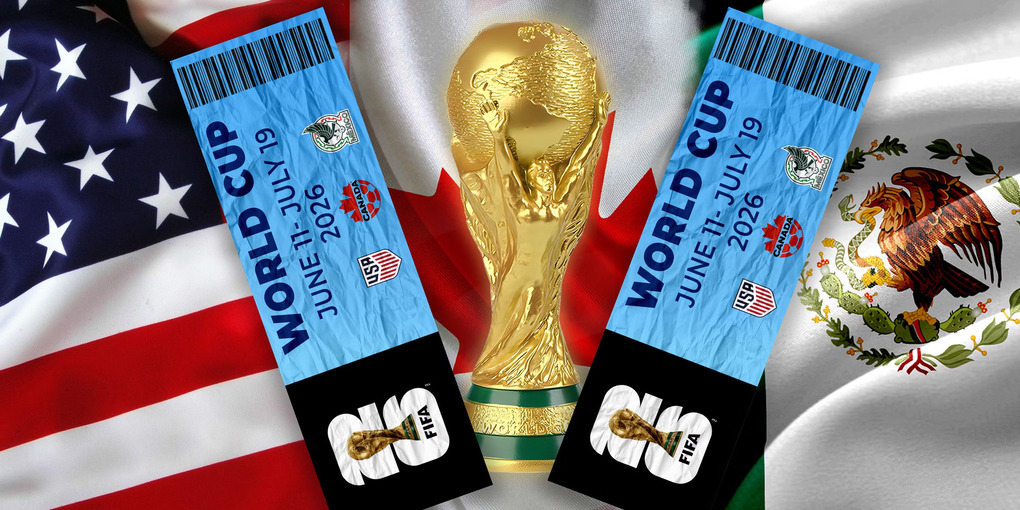
All official FIFA World Cup 2026 tickets are sold exclusively through FIFA.com/tickets. No other platform is an authorized primary seller. Third-party platforms, including StubHub, SeatGeek, and Ticketmaster, operate as secondary resale markets only — they do not sell tickets directly from FIFA’s allocation.
The official purchase path requires a FIFA ticketing account linked to a verified identity. FIFA enforces this through its Fan ID system, which ties each ticket to a named individual and passport-level identification. Tickets are non-transferable outside FIFA’s own resale and exchange platform.
Step-by-Step: Creating a FIFA Ticketing Account
Setting up a FIFA ticketing account is the mandatory first step before any purchase can be made. The process runs as follows:
- Navigate to FIFA.com/tickets and select “Create Account.”
- Enter full legal name, date of birth, and nationality exactly as they appear on your passport.
- Upload a valid government-issued photo ID for Fan ID verification.
- Set a preferred payment method. FIFA accepts major credit and debit cards, including Visa (the official payment partner), and select regional payment methods depending on country of residence.
- Once verified, browse available matches by date, city, stadium, or match stage.
Verification typically takes between 24 and 72 hours. Attempting to purchase before verification is complete will result in a blocked checkout. Fans are advised to complete account setup well in advance of any sales window opening.
Ticket Delivery and Stadium Entry
FIFA World Cup 2026 tickets are delivered exclusively as mobile tickets through the official FIFA app. Physical tickets are not issued. On match day, fans present their mobile ticket barcode at stadium gates alongside the same ID document used during Fan ID verification. The name on the ticket must match the ID presented at entry.
If a mobile ticket fails to load, FIFA’s in-app support provides a fallback QR code retrieval option tied to the ticketing account. Fans are advised to download tickets to their device while connected to Wi-Fi before traveling to the stadium, as mobile connectivity in stadium queues can be unreliable.
FIFA World Cup 2026 Ticket Sales Phases
FIFA structured the 2026 ticket sales process across four distinct phases, each with different selection mechanics, eligibility requirements, and timing.
Phase 1 — Visa Presale Draw
The Visa Presale Draw was the first sales window, available exclusively to holders of qualifying Visa payment cards. Eligible cardholders entered a time-slot lottery system. Successful entrants received a 48-hour window to purchase tickets. The maximum purchase limit was 40 tickets per buyer across all matches. This phase was not first-come, first-served — it was randomized allocation within the Visa cardholder pool.
Phase 2 — Early Ticket Draw (Ballot)
The Early Ticket Draw opened to all FIFA ticketing account holders. Fans submitted requests during a defined entry window without selecting specific seats. FIFA processed these requests through a randomized selection algorithm. Successful applicants received email notification and a personal purchase window. The match and seat category were assigned, not chosen — demand significantly exceeded supply in this phase.
Phase 3 — Random Selection Draw (Match-Specific)
Phase 3 was the first opportunity for fans to request tickets for specific matches. This phase generated more than 5 million ticket requests within 24 hours of opening, according to FIFA’s official communications. The Colombia vs. Portugal match in Miami was the single most-requested fixture in this phase. The draw was still randomized — high request volume did not guarantee allocation.
Phase 4 — Last-Minute Sales Phase (First-Come, First-Served)
The Last-Minute Sales Phase launched on Tuesday, April 1, 2025, operating on a real-time, first-come, first-served basis. FIFA releases the remaining inventory in rolling batches. Fans monitor the FIFA ticketing portal for new stock.
Unlike earlier phases, no ballot entry is required — purchases complete instantly if inventory is available at the moment of checkout.
FIFA World Cup 2026 Ticket Prices — Every Category Explained
FIFA World Cup 2026 ticket prices range from $60 (Category 3, group stage) to $8,680 (premium Category 1, final at MetLife Stadium). Prices vary by match stage, seat category, and host city. Dynamic pricing means the face value differs by venue and fixture demand.
FIFA classifies tickets into three standard categories for most matches, with Category 1 representing premium lower-bowl seating, Category 2 covering mid-tier sections, and Category 3 covering upper-tier sections. The final and semi-final matches carry a separate, elevated price structure.
Group Stage Ticket Prices
The entry point for the 2026 World Cup is $60 at Category 3 face value for group stage matches in smaller host cities. Prices increase with category and city demand. The table below shows the full group stage price range across categories.
| Category | Seat Location | Price Range (Face Value) |
|---|---|---|
| Category 3 | Upper tier / end sections | $60 – $105 |
| Category 2 | Mid-tier sections | $105 – $175 |
| Category 1 | Premium lower bowl | $175 – $350 |
Dynamic pricing applies based on match demand. A group stage game between two lower-ranked nations in Kansas City will carry a lower face value than a marquee fixture between Argentina and Brazil in Miami.
Knockout Round and Semi-Final Ticket Prices
Ticket prices increase substantially from the Round of 32 onwards. Category 2 knockout round tickets start at approximately $250 face value, rising to $600–$900 at Category 1 for semi-finals. Resale market premiums above face value at this stage typically run between 3x and 5x on secondary platforms.
World Cup Final Ticket Prices — MetLife Stadium
The 2026 World Cup final is scheduled for Sunday, July 19, 2026, at MetLife Stadium in East Rutherford, New Jersey. Official face value for final tickets runs from $4,185 (Category 3) to $8,680 (Category 1 premium). On the official FIFA resale marketplace, final tickets have been listed at multiples above face value with no price ceiling enforced.
For context: the cheapest officially priced final ticket in Qatar 2022 was approximately $604 — meaning the 2026 final’s Category 3 entry point is roughly 6.9 times more expensive than Qatar’s equivalent.
Are World Cup Tickets Worth the Price?
The total per-person cost of attending the 2026 World Cup is significantly higher than the ticket face value alone. The table below provides a city-by-city cost estimate incorporating average round-trip flights (from within North America), five-night hotel accommodation, and daily food and transport costs.
| Host City | Cheapest Ticket | Avg. Flights | Hotel (5 Nights) | Est. Food & Transport | Est. Total Per Person |
|---|---|---|---|---|---|
| New York / NJ | $175 | $300–$600 | $1,500–$2,500 | $400 | $2,375–$3,675 |
| Miami | $105 | $250–$500 | $1,200–$2,000 | $350 | $1,905–$2,955 |
| Los Angeles | $105 | $300–$600 | $1,000–$1,800 | $350 | $1,755–$2,855 |
| Toronto | $105 | $200–$500 | $800–$1,400 | $300 | $1,405–$2,305 |
| Dallas | $60 | $250–$450 | $700–$1,200 | $280 | $1,290–$1,990 |
| Seattle | $60 | $300–$500 | $800–$1,300 | $300 | $1,460–$2,160 |
| Kansas City | $60 | $250–$450 | $600–$1,000 | $250 | $1,160–$1,760 |
| Atlanta | $60 | $250–$450 | $700–$1,200 | $280 | $1,290–$1,990 |
Estimates based on average booking data; actual costs vary by travel origin, booking lead time, and match day.
FIFA World Cup 2026 Tickets by City
Each of the 16 host stadiums across the United States, Canada, and Mexico offers different match volumes, ticket price ranges, and travel logistics. The breakdown below covers key data for each major host city.
New York / New Jersey — MetLife Stadium
MetLife Stadium in East Rutherford, New Jersey, hosts 8 matches including the final on Sunday, July 19, 2026. It is the highest-demand venue in the tournament. The final sold more quickly and at higher resale premiums than any other fixture. Group stage tickets at MetLife carry premium pricing relative to other host cities at equivalent categories. Transit to MetLife runs via NJ Transit from Penn Station, Manhattan.
Los Angeles — SoFi Stadium
SoFi Stadium in Inglewood hosts 8 matches, including the USMNT opening game. The stadium seats approximately 70,000, with retractable roof coverage. Group stage tickets are among the more competitively priced at Los Angeles venues. Transit options are limited — most attendees drive or use rideshare services. Parking requires advance reservation.
Toronto — BMO Field
BMO Field hosts 6 matches and ranks among the top 5 most-demanded venues globally for the 2026 tournament. One Round of 32 fixture in Toronto was among the five highest-requested games in Phase 3 of ticket sales. The stadium seats approximately 30,000, making it the smallest venue in the tournament, which amplifies scarcity pressure on ticket availability. The venue is accessible via the 509 Harbourfront and 511 Bathurst streetcar lines from Union Station.
Vancouver — BC Place
BC Place in Vancouver hosts 6 matches and draws strong demand from Canadian supporters and international fans attending via the West Coast. The retractable-roof stadium seats approximately 54,500. Transit access from downtown Vancouver is direct via SkyTrain to Stadium–Chinatown Station.
Kansas City — Arrowhead Stadium
Arrowhead Stadium hosts 6 matches with some of the lowest official ticket face values in the tournament. Kansas City’s relatively lower accommodation and transport costs make it one of the most cost-effective host cities for fans targeting value group stage games. The venue seats 76,416 and is accessible primarily by car or dedicated match-day shuttle services.
Dallas — AT&T Stadium
AT&T Stadium in Arlington hosts 7 matches. The venue seats 80,000 with expansion capacity to 100,000. Dallas is one of the larger host markets with strong international supporter communities due to its diverse metropolitan population. Group stage face values begin at $60 at Category 3.
Houston — NRG Stadium
NRG Stadium hosts 6 matches. The domed venue seats approximately 72,000. Houston’s significant Latin American diaspora population drives high local demand for South American and CONCACAF-adjacent fixtures.
Seattle — Lumen Field
Lumen Field hosts 6 matches. The venue seats approximately 69,000 and is accessible by Link Light Rail to Stadium Station, making it one of the more transit-friendly host venues in the US. Seattle’s proximity to Vancouver creates a cross-border fan corridor with elevated demand for fixtures featuring CONCACAF and South American nations.
Atlanta — Mercedes-Benz Stadium
Mercedes-Benz Stadium hosts 6 matches. The retractable-roof venue seats 71,000. Atlanta has a significant international population and is a major air hub, making it one of the more accessible host cities for international travelers arriving via direct transatlantic flights.
Philadelphia — Lincoln Financial Field
Lincoln Financial Field hosts 6 matches and seats approximately 69,796. Philadelphia is accessible from New York via Amtrak or regional rail, making it a realistic dual-city option for fans already attending MetLife fixtures.
Boston — Gillette Stadium
Gillette Stadium in Foxborough hosts 6 matches. The venue seats approximately 65,878. It is approximately 28 miles south of Boston, accessible via commuter rail from South Station to Foxboro on match-day special services.
Miami — Hard Rock Stadium
Hard Rock Stadium hosts 6 matches, including Colombia vs. Portugal — the most-requested fixture in Phase 3 of ticket sales. Miami’s international character and direct flights from Europe and South America drive exceptionally high demand for fixtures featuring European and South American nations. Group stage face values at Category 3 begin at $105.
Official FIFA Resale vs. StubHub vs. SeatGeek — Buying Safely
The secondary market for FIFA World Cup 2026 tickets is large, active, and carries meaningful risk if buyers do not verify the transfer mechanism. The table below compares the four primary platforms buyers encounter.
| Platform | Type | Price Cap | Buyer Protection | Transfer via FIFA App Required | Risk Level |
|---|---|---|---|---|---|
| FIFA Official Resale | Authorized secondary | None | Full (FIFA-guaranteed entry) | Yes | Low |
| StubHub | Unauthorized secondary | None | StubHub FanProtect | No | Medium |
| SeatGeek | Unauthorized secondary | None | SeatGeek Buyer Guarantee | No | Medium |
| Ticketmaster | Unauthorized secondary (select markets) | None | Ticketmaster Guarantee | No | Medium |
| Gametime | App-based secondary | None | Gametime Guarantee | No | Medium–High |
FIFA’s Official Resale and Exchange Marketplace
FIFA’s own resale marketplace is the only authorized secondary channel. It reopened on Wednesday, April 2, 2025. Tickets listed here remain tied to the FIFA ticketing system and are transferred via the FIFA app with a new QR code generated for the buyer.
There is no price ceiling on the official resale platform — sellers set their own prices. Listings here have reached multiples of face value, including final tickets listed above $15,000.
The key distinction from third-party platforms is that entry is guaranteed because the ticket remains within FIFA’s authenticated system.
StubHub, SeatGeek, and Ticketmaster
These platforms operate outside FIFA’s official ticketing infrastructure. Tickets listed there exist as screenshots, PDF files, or digital images of QR codes — not as live FIFA app transfers.
FIFA’s ticketing system uses dynamic QR codes that refresh every 60 seconds in the FIFA app. A static screenshot of a QR code will not function at the gate and cannot be validated. Buyers paying for a screenshot-based ticket on any third-party platform take on the full risk of gate denial.
Buyer protection policies on StubHub, SeatGeek, and Ticketmaster offer refunds or replacements if a ticket fails, but replacement at a sold-out World Cup final is not a realistic remedy.
How to Identify a Fake or Invalid World Cup Ticket
The following indicators signal a fraudulent or invalid listing:
- The listing appeared before FIFA’s official sales phases opened.
- The seller provides a static image, PDF, or screenshot of a QR code rather than a live FIFA app transfer.
- The price is below the Category 3 official face value (at $60 for group stage), which signals the ticket may be fabricated.
- The seller requests payment via bank transfer, cryptocurrency, or peer-to-peer payment services such as Venmo or Zelle.
- The listing is on a marketplace not connected to FIFA’s transfer system.
The FIFA Free Ticket Website Error — What Happened
In late 2025, a FIFA website error erroneously generated and distributed free tickets to thousands of fans. FIFA voided all tickets issued through the glitch and did not honor them at entry. The incident generated over 20,000 search queries on Bing in a single trend window.
FIFA offered affected users priority access to a new purchase window as a partial remedy, though the response drew criticism from Football Supporters Europe (FSE) and fan advocacy groups.
No free World Cup 2026 tickets exist through any legitimate channel. Any listing or claim of free ticket availability is either a scam or a reference to this resolved error.
FIFA World Cup 2026 Tickets for International Fans
International fans face additional complexity beyond the standard purchase process, including US entry documentation, Fan ID verification across passport types, and national supporter club allocations.
England Fans — ESTC Allocation and Travel Cost
England supporters can access a portion of England’s official allocation through the England Supporters’ Travel Club (ESTC). The ESTC allocation covers group stage matches and advances if England progresses.
Fans purchasing outside the ESTC allocation must use FIFA.com/tickets or the official resale marketplace directly. The total cost of attending England’s full group stage run from the United Kingdom — including flights, accommodation, and tickets — is estimated at approximately £5,500–£7,000 per person based on 2026 travel booking data.
Argentina and South American Fans
Argentina ranked among the highest-volume purchasing countries in Phase 2 and Phase 3 of FIFA’s sales process, reflecting demand from both the Argentine diaspora within the US and international travelers.
The Colombia vs. Portugal fixture in Miami was the most-requested match in Phase 3, indicating concentrated South American fan demand in the Miami market. Argentine and Colombian nationals traveling to USA matches require a valid B-1/B-2 US visitor visa unless their country participates in the US Visa Waiver Program. Neither Argentina nor Colombia is currently in the Visa Waiver Program.
Mexico and Canada Fans — Host Nation Access
Mexico and Canada, as co-host nations, have domestic matches played within their own borders. Mexico’s opening group stage match — Mexico vs. South Africa — takes place at Estadio Azteca in Mexico City, requiring no US entry documentation for Mexican nationals attending that fixture. For matches in US cities, Mexican nationals require a valid US visa or border crossing card. Canadian nationals do not require a US visa for travel to US host cities.
Scotland, Portugal, and France Fans
Scotland supporters searching for 2026 World Cup tickets should be aware that Scotland did not qualify for the 2026 tournament. Search volume for “Scotland World Cup tickets” reflects interest from fans who may be monitoring qualification outcomes.
Portugal and France both qualified and have national supporter club allocations available through their respective Football Federations, in addition to the general FIFA.com/tickets channel.
The 5 Most In-Demand FIFA World Cup 2026 Fixtures
Based on Phase 3 ballot request data and official FIFA communications, the five highest-demand matches in the 2026 tournament are listed below.
| Rank | Match | Venue | City | Match Stage |
|---|---|---|---|---|
| 1 | Colombia vs. Portugal | Hard Rock Stadium | Miami | Group Stage |
| 2 | Mexico vs. South Korea | Estadio Akron | Guadalajara | Group Stage |
| 3 | World Cup Final (TBD vs. TBD) | MetLife Stadium | East Rutherford, NJ | Final |
| 4 | Mexico vs. South Africa (Opening Match) | Estadio Azteca | Mexico City | Group Stage |
| 5 | Round of 32 Fixture (TBD) | BMO Field | Toronto | Round of 32 |
FIFA World Cup 2026 Tickets — Frequently Asked Questions
How much do FIFA World Cup 2026 tickets cost?
Group stage tickets start at $60 (Category 3 face value). The World Cup final at MetLife Stadium ranges from $4,185 to $8,680 at official face value. Resale prices on both the official FIFA marketplace and third-party platforms exceed these figures, with no price ceiling in place.
Can I still buy FIFA World Cup 2026 tickets?
The Last-Minute Sales Phase launched on Tuesday, April 1, 2025, and operates on a first-come, first-served basis through FIFA.com/tickets. FIFA releases remaining inventory in rolling batches throughout the tournament. The official FIFA resale marketplace is also active. No ballot entry is required during this phase.
Are World Cup tickets on StubHub and SeatGeek legitimate?
Tickets listed on StubHub and SeatGeek are secondary market listings, not official FIFA sales. The primary risk is that FIFA’s ticketing system uses dynamic QR codes refreshed every 60 seconds in the FIFA app.
A static QR code image purchased on any third-party platform will not function at the gate. Both platforms offer buyer protection in the form of refunds or replacements, but replacement availability at high-demand matches cannot be guaranteed.
Can I transfer or resell my World Cup ticket?
Ticket transfers are permitted exclusively through FIFA’s official resale and exchange marketplace. Transferring a ticket outside this system — including sending a QR code screenshot or PDF — voids the ticket. The new holder will be denied entry at the gate, and the original ticket remains linked to the first buyer’s Fan ID.
Which World Cup host city has the cheapest tickets?
Group stage matches in Kansas City, Atlanta, Dallas, and Seattle carry the lowest face values in the tournament, starting at $60 at Category 3. These cities also have lower accommodation and transport costs relative to New York, Miami, and Los Angeles, making them the most cost-effective options for fans prioritizing affordability over venue prestige.
What is the FIFA ticket lottery, and how does it work?
The FIFA ticket ballot is a randomized selection process. Fans register for an entry window without guaranteeing a ticket. FIFA processes all requests algorithmically and notifies successful applicants by email. A successful ballot entry provides a personal purchase window — it does not confirm a ticket. Fans who clear the ballot must still complete payment within their assigned window.
Why did FIFA cancel free World Cup tickets?
A software error on the FIFA ticketing platform in late 2025 generated free ticket confirmations for thousands of users. FIFA voided all tickets issued through the error and confirmed they would not be honored at stadiums. The incident is resolved. No free tickets were issued as an intentional promotion. Any current claim of free FIFA World Cup 2026 tickets available through any platform is fraudulent.
Do I need a visa to attend the World Cup in the USA?
Fans from Visa Waiver Program countries — including the United Kingdom, Germany, France, Australia, and Japan — do not require a visa for matches played in the United States. Fans from non-VWP countries, including Argentina, Colombia, Brazil, and Mexico, require a valid B-1/B-2 visitor visa or, for Mexican nationals, a valid Border Crossing Card. Canada and Mexico matches in their respective host cities have separate entry requirements. Fans are advised to check the current US State Department visa eligibility before booking travel.
Money-Saving Strategies for FIFA World Cup 2026 Fans
Attending the 2026 World Cup at a lower cost is achievable with deliberate match selection and a booking approach. The following strategies reduce total spend without sacrificing the live experience:
- Target group stage games in smaller host cities. Kansas City, Atlanta, and Seattle offer face-value entry points at $60 and significantly lower accommodation costs than New York or Miami.
- Use the official FIFA resale marketplace rather than StubHub or SeatGeek. Prices may be comparable, but the official platform provides guaranteed entry and eliminates QR code fraud risk.
- Purchase Category 3 tickets. Upper-tier seating at World Cup stadiums still provides a full view of the pitch. The matchday atmosphere is equivalent across all categories.
- Book flights and hotels well in advance of match schedules being confirmed. Hotel prices in host cities surge within 72 hours of match schedule announcements.
- Attend the group stage over the knockout rounds. Group stage ticket face values are lower, competition for availability is lower, and the travel logistics are more predictable before bracket outcomes are known.
- Consider multi-city itineraries. Pairing a Philadelphia fixture with a New York fixture, or a Toronto game with a nearby US host city match, spreads travel costs across multiple games.

